
Wellness
What Is a Rasayana Herb? Ayurveda's Rejuvenative Herbs, Explained

Key takeaways
- Rasayana is a classical Ayurvedic category of herbs and practices traditionally used to nourish tissues, build ojas (vitality) and support healthy ageing.
- Rasayana herbs are traditionally taken over sustained periods as part of a routine — not as one-time or overnight remedies.
- Classical texts describe different ways of taking Rasayana, from elaborate clinical methods to simple, everyday use alongside normal life (Vatatapika Rasayana).
- Shatavari and Guduchi, two of Tanvishataa's three herbs, are both classified as Rasayana in classical Ayurvedic texts.
What does Rasayana actually mean?
Spend long enough in a conversation about Ayurveda and the word Rasayana will come up — usually translated loosely as "tonic" or "rejuvenator." The real meaning is more specific, and more interesting.
Rasayana comes from two Sanskrit words: rasa (the essential nutrient fluid formed from digested food, the first of the body's seven dhatus, or tissues) and ayana (the path or means of reaching). Put together, Rasayana literally means "the path by which rasa is carried" — therapies and herbs traditionally believed to help nourishment reach and nourish every tissue in the body, right down to the deepest layer.
In practice, Ayurveda uses the word Rasayana for two things: a category of herbs, and a branch of classical medicine (Rasayana Chikitsa) dedicated to nourishment, immunity and healthy ageing — one of the eight classical branches of Ayurveda (Ashtanga Ayurveda).
How is a Rasayana herb different from any other herb?
Not every herb used in Ayurveda is called a Rasayana. The classification is specific: Rasayana herbs and formulations are traditionally understood to nourish rasa dhatu deeply enough that the benefit is believed to carry through to every subsequent tissue layer — rakta (blood), mamsa (muscle), meda (fat), asthi (bone), majja (marrow) and finally shukra (reproductive tissue) — rather than acting quickly on a single symptom.
- Nourishing and building rather than symptom-suppressing
- Traditionally taken over weeks or months, not days
- Meant to work alongside good sleep, diet and daily routine — never in place of them
- Associated with supporting ojas, the subtle reserve of vitality and resilience Ayurveda links to immunity
Are all Rasayana herbs used in the same way?
Classical texts describe more than one way of taking a Rasayana. The most elaborate, called Kutipraveshika Rasayana, involves a structured stay under close medical supervision — rarely practised outside specialised clinical settings today. Far more common, both historically and now, is Vatatapika Rasayana: taking a Rasayana herb as part of everyday life, without withdrawing from normal work and routine. This is how herbs such as Shatavari, Guduchi and Amalaki have traditionally been used by households for generations.
Which herbs are classically considered Rasayana?
Several herbs recur across classical Rasayana literature, each associated with a slightly different traditional emphasis:
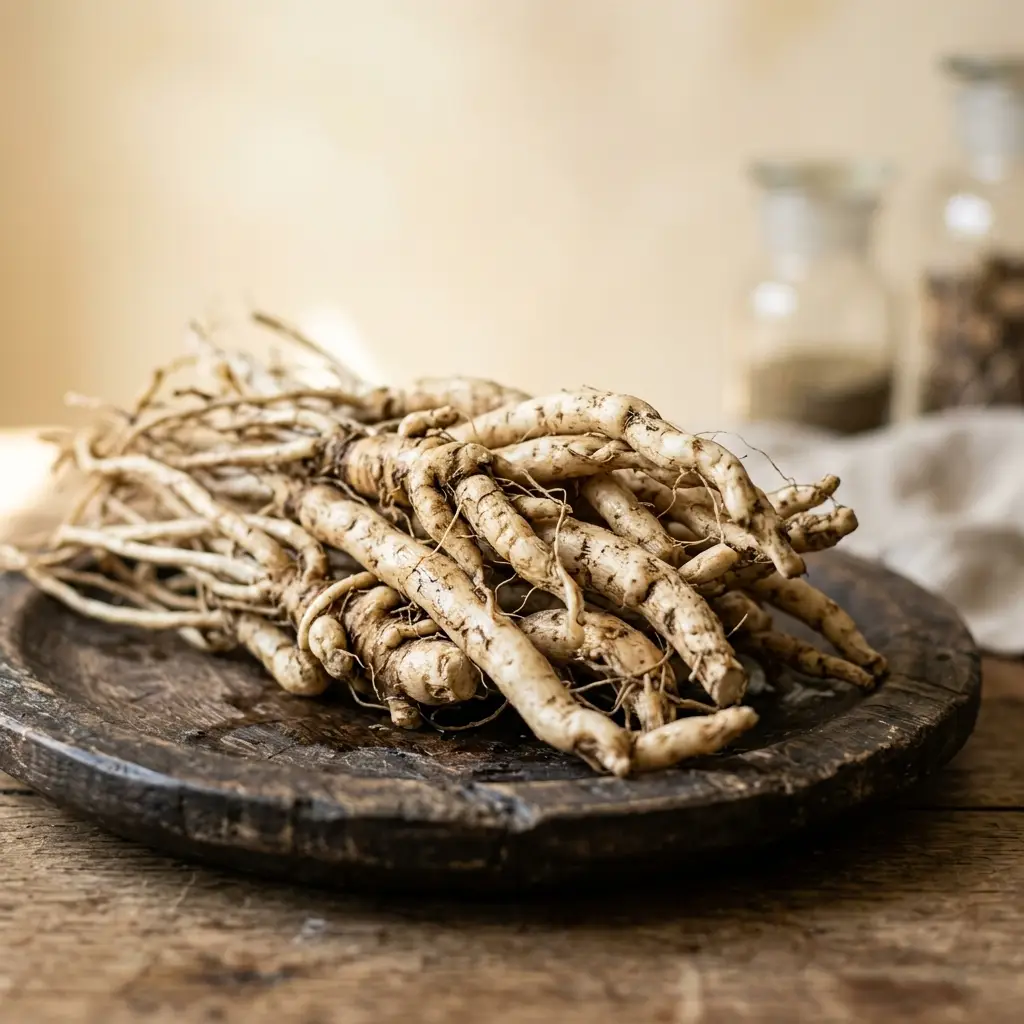
- Shatavari (Asparagus racemosus) — traditionally associated with nourishment, and especially valued for women's wellness across life stages
- Guduchi / Amrita (Tinospora cordifolia) — one of the few herbs whose Sanskrit name, Amrita, itself means 'nectar of immortality'; traditionally linked to general immunity and digestive fire (deepana-pachana)
- Amalaki (Indian gooseberry) — traditionally valued for its vitamin C content and rejuvenative qualities
- Ashwagandha (Withania somnifera) — traditionally associated with strength and resilience to everyday stress
- Haritaki — traditionally described in the Charaka Samhita as a Rasayana supporting digestion and elimination
These are classical associations recorded in Ayurvedic texts, not claims that any single herb treats or cures a disease.
Where does Tanvishataa fit into this?
Two of Tanvishataa's three herbs — Shatavari and Guduchi — are individually classified as Rasayana in classical Ayurvedic literature. Shatavari makes up the largest share of the formulation, prepared using the classical Ghana Satva (concentrated extract) method, alongside Guduchi and Anantmul. Taken as part of a steady daily routine — traditionally two tablets twice a day after meals with water for the first three months, then one tablet twice daily as maintenance, or as advised by your physician — Tanvishataa is intended to work the way classical Rasayana herbs are meant to: quietly, gradually, and alongside good food, sleep and routine, not instead of them.
This is also why we always pair herb education with routine — our guides to agni (the digestive fire) and the three doshas explain the everyday foundation that any Rasayana herb is traditionally meant to support, not replace.
Is a Rasayana herb right for everyone?
Classical Ayurveda was never a one-size-fits-all system — even Rasayana herbs were traditionally recommended based on a person's constitution (prakriti), age, digestive strength and season. Some Rasayana herbs suit certain doshas or life stages better than others.
If you are pregnant or breastfeeding, managing a diagnosed health condition, or taking regular medication, speak to a qualified Ayurvedic physician before starting any new herbal supplement — including a Rasayana — and never stop prescribed treatment on your own.
When should you see an Ayurvedic doctor?
A Rasayana herb is traditionally meant to be a quiet, long-term companion to good routine — not a response to an acute symptom. If you are dealing with a specific health concern, persistent symptoms, or are simply unsure which herbs suit your constitution, a proper consultation with a qualified Ayurvedic physician is always the right first step, rather than self-selecting a herb based on its classical reputation alone.
References & further reading
- Charaka Samhita, Chikitsa Sthana, Chapter 1 (Rasayana Adhyaya) — the classical definition and scope of Rasayana therapy (classical Ayurvedic text).
- Ashtanga Hridaya by Vagbhata, Uttara Sthana — classical description of Rasayana Vidhi, the methods of rejuvenation therapy (classical Ayurvedic text).
- Sushruta Samhita, Chikitsa Sthana — Rasayana and Vajikarana as two of the eight classical branches of Ayurveda (classical Ayurvedic text).
- These references describe traditional Ayurvedic concepts and are not statements of medical fact.
Ayurvedic wellness tips, guides and stories — in your language.
Buy NowFrequently asked questions
What does the word Rasayana mean?+
Rasayana literally means "the path of rasa" — therapies and herbs traditionally believed to help nourishment reach and nourish every tissue layer of the body, supporting vitality and healthy ageing.
Is a Rasayana herb the same as a 'tonic'?+
The words are often used loosely as synonyms, but classical Rasayana is a more specific idea — a category of nourishing, tissue-building therapy meant to be used steadily over time, rather than a one-time pick-me-up.
What is the difference between Kutipraveshika and Vatatapika Rasayana?+
Kutipraveshika is an elaborate, supervised clinical method rarely used today. Vatatapika is the everyday approach — taking a Rasayana herb as part of normal daily life — and is how herbs like Shatavari and Guduchi have traditionally been used by households for generations.
Can anyone take a Rasayana herb?+
Classical Ayurveda recommends Rasayana based on individual constitution, age and health status. If you are pregnant, breastfeeding, managing a diagnosed condition, or on regular medication, consult a qualified Ayurvedic physician before starting one.
Does Tanvishataa work as a Rasayana?+
Tanvishataa combines Shatavari and Guduchi — both classically categorised as Rasayana herbs — with Anantmul, prepared using the traditional Ghana Satva method. It is a herbal wellness supplement traditionally used to support nourishment and everyday wellness as part of a balanced routine, not a treatment for any disease.
Dr Rucha Mehendale Pai
BAMS (Ayurvedacharya) · Nadi Parikshan Expert
Dr Rucha is an Ayurvedic physician with over a decade of clinical practice in women’s health, digestion and lifestyle wellness, and the formulator behind Tanvi Herbals’ Tanvishataa. She writes to bring authentic, everyday Ayurveda to families across India.