
Acidity & Digestion
Is It Just Gas — or Amlapitta? Ayurveda's Term for Sour Acidity, Explained


Key takeaways
- Amlapitta is a classical Ayurvedic term for a pattern of aggravated, sour-quality Pitta — not a direct medical equivalent of gastritis or GERD, though the two overlap in everyday experience.
- Classical texts describe it moving in two directions: urdhvaga (upward — sour belching, nausea, burning toward the chest) and adhoga (downward — burning lower down, loose motions).
- Ayurveda traditionally links Amlapitta to viruddha ahara (incompatible food combinations), untimely eating and excess sour or fried food — not one single fixed cause.
- Anantmul and Shatavari, part of Tanvishataa's formulation, are traditionally valued for a cooling quality — but the supplement does not diagnose or treat Amlapitta; persistent symptoms need a doctor's evaluation.
Is what you're feeling just 'gas' — or something Ayurveda already has a name for?
A heavy lunch, a sour burp an hour later, a warmth that climbs from the stomach toward the throat — most of us just call this 'gas' or 'acidity' and move on. Classical Ayurveda looked at this same everyday pattern centuries ago and gave it a specific name: Amlapitta. Knowing what the word actually describes is a useful first step, whether or not you ever reach for a remedy.
What does Amlapitta actually mean?
Amla means sour; Pitta is the classical dosha governing heat, transformation and digestion. Put together, Amlapitta describes a traditional picture of Pitta turning excessively sour and reactive — the digestive fire behaving less like a steady flame and more like something that flares up and burns. It is a descriptive, classical category, not a direct stand-in for a modern diagnosis like gastritis, peptic ulcer disease or GERD, even though the everyday experience often overlaps.
How does classical Ayurveda describe Amlapitta showing up?
The classical description is really a cluster of familiar sensations, not one single symptom:
- Amlodgara — sour or bitter belching after meals.
- A burning sensation rising from the stomach toward the chest and throat.
- Nausea, or a heavy, unsettled stomach after eating.
- Aruchi — a dulled appetite or a dislike for sweet-tasting food.
- A general sense of klama (fatigue or heaviness) after meals.
Why do classical texts describe Amlapitta moving in two directions?
Traditional texts classify Amlapitta as urdhvaga (upward-moving) or adhoga (downward-moving), depending on which way the aggravated Pitta traditionally travels. The urdhvaga pattern is described through sour belching, nausea and burning toward the chest and throat — closer to what most people mean by 'reflux'. The adhoga pattern is described through burning discomfort lower in the abdomen and loose motions. Both are framed as the same underlying imbalance simply showing up in different directions.
What does Ayurveda traditionally say causes Amlapitta?
Classical texts don't point to one single cause. Amlapitta is traditionally linked to viruddha ahara (combining foods with opposing qualities — like sour fruit with milk), eating before the previous meal has been digested, an excess of sour, fried or fermented food, irregular meal timings, and stress that disturbs a steady digestive rhythm. The common thread is a digestive fire (agni) that has been pushed out of its usual balance rather than a single trigger food.
Does sour belching or a burning stomach mean you definitely have Amlapitta?
Not necessarily, and this is worth being honest about. The symptoms Ayurveda groups under Amlapitta — sour belching, burning, nausea — overlap with several modern conditions, from simple indigestion to gastritis, acid reflux or, less commonly, an ulcer. A classical descriptive framework is not the same as a medical diagnosis, and it isn't meant to replace one. If symptoms are frequent or bothersome, a proper evaluation by a doctor is the right next step, not a self-declared label.
Where do Tanvishataa's herbs traditionally fit into this picture?
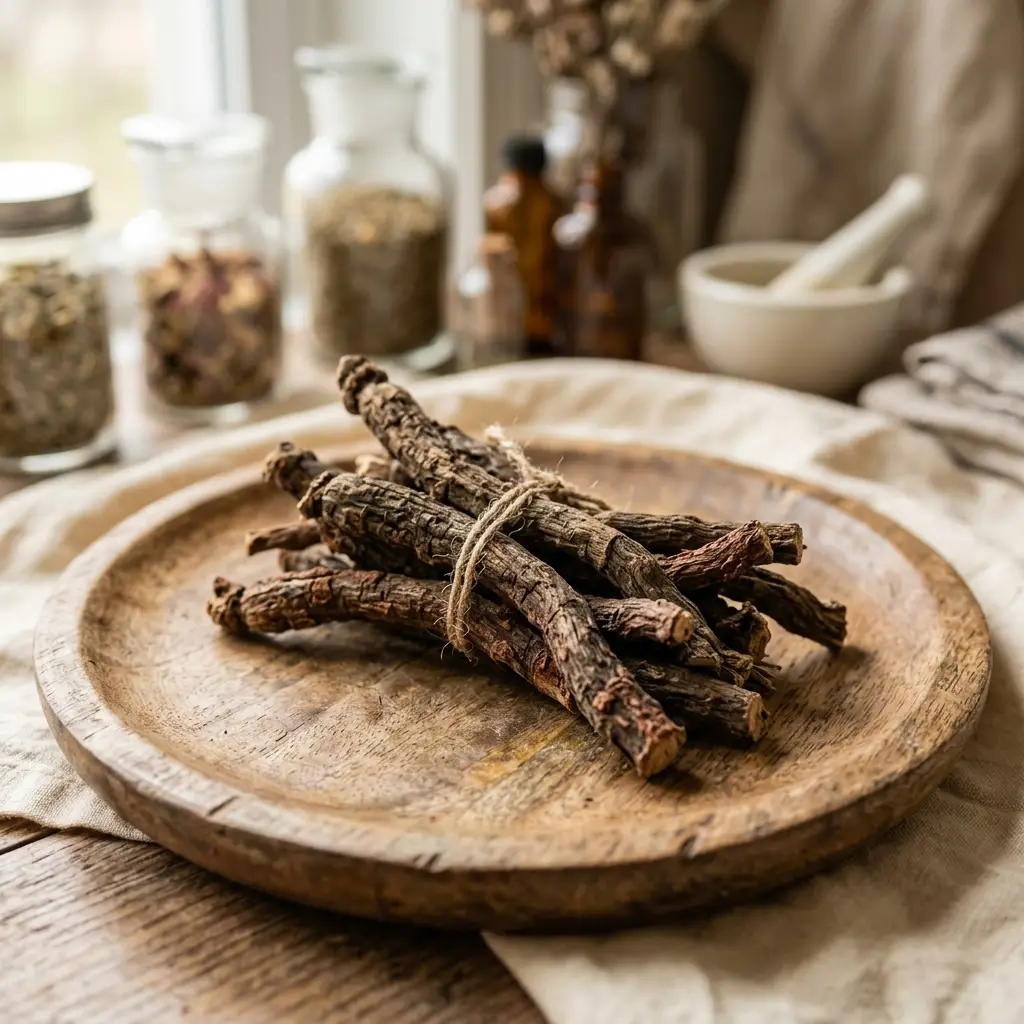
Anantmul (Sariva), 5% of Tanvishataa's disclosed extract composition, is traditionally described as having a sheeta virya (cooling) quality, while Shatavari — 80% of the composition — is traditionally valued as a Rasayana with a soothing, nourishing role. Prepared using the classical Ghana Satva (concentrated extract) method, Tanvishataa is traditionally used to support general wellness as part of an everyday routine. It does not diagnose, treat or cure Amlapitta, acidity or any digestive condition — that requires a doctor's assessment, not a supplement.
When should you see a doctor rather than trying to manage sour acidity yourself?
See a doctor if burning or sour belching is frequent, severe or persistent despite basic diet changes; if you notice blood in vomit or stool, black or tarry stools, unintended weight loss, difficulty swallowing, or chest pain — these need timely medical evaluation, not a wait-and-watch approach.
References & further reading
- Madhava Nidana (Roga Vinischaya), chapter on Amlapitta — the classical Ayurvedic text most directly dedicated to describing this disease pattern (classical Ayurvedic text).
- Charaka Samhita, Sutra Sthana — the classical dosha and agni framework underlying Pitta-type digestive disturbance (classical Ayurvedic text).
- Ashtanga Hridaya by Vagbhata, Nidana Sthana — classical descriptions of Pitta-driven digestive imbalance (classical Ayurvedic text).
- These references describe traditional Ayurvedic concepts and are not statements of modern medical diagnosis.
Ayurvedic wellness tips, guides and stories — in your language.
Buy NowFrequently asked questions
Is Amlapitta the same as acidity or GERD?+
Not exactly. Amlapitta is a classical Ayurvedic descriptive category that overlaps with what many people call 'acidity' or reflux in everyday language, but it isn't a direct stand-in for a modern medical diagnosis like GERD or gastritis — those need a doctor's evaluation.
Can I diagnose myself with Amlapitta based on these symptoms?+
It's best not to. Sour belching, burning and nausea overlap with several conditions, some of which need medical attention. Use this as background understanding, not a self-diagnosis, and see a doctor if symptoms are frequent or troubling.
What foods does Ayurveda traditionally link to Amlapitta?+
Excess sour, fried or fermented food, incompatible food combinations (viruddha ahara), and irregular meal timing are traditionally associated with aggravating this pattern — see our guide to cooling foods for a Pitta-type stomach for practical everyday choices.
Does Tanvishataa treat or cure Amlapitta?+
No. Tanvishataa is a herbal wellness supplement; Anantmul and Shatavari are traditionally valued for cooling and soothing qualities, but the supplement does not diagnose, treat or cure Amlapitta, acidity or any digestive condition.
When should I see a doctor instead of just managing it myself?+
If burning or sour belching is frequent, severe or persistent, or if you notice blood in vomit or stool, black stools, unexplained weight loss, difficulty swallowing or chest pain, see a doctor promptly.
Dr Rucha Mehendale Pai
BAMS (Ayurvedacharya) · Nadi Parikshan Expert
Dr Rucha is an Ayurvedic physician with over a decade of clinical practice in women’s health, digestion and lifestyle wellness, and the formulator behind Tanvi Herbals’ Tanvishataa. She writes to bring authentic, everyday Ayurveda to families across India.