
Wellness
She Feeds Everyone and Eats Last: Everyday Ayurvedic Care for the Indian Homemaker
Key takeaways
- Classical Ayurveda describes how, when and how much we eat as just as important as what we eat — a rule many homemakers quietly break by eating last, fast and standing.
- Warm, freshly cooked food eaten at regular times is the traditional foundation of comfortable digestion and steady energy.
- Frequent cups of tea on an empty stomach are a common habit worth a gentle second look, and a snack or warm meal first is the traditional advice.
- Rest, sleep and a few minutes of self-care are part of the classical routine, not a luxury. Rasayana herbs such as Shatavari are a gentle companion to these basics, never a replacement.
Why does the person who feeds the family so often eat the worst?
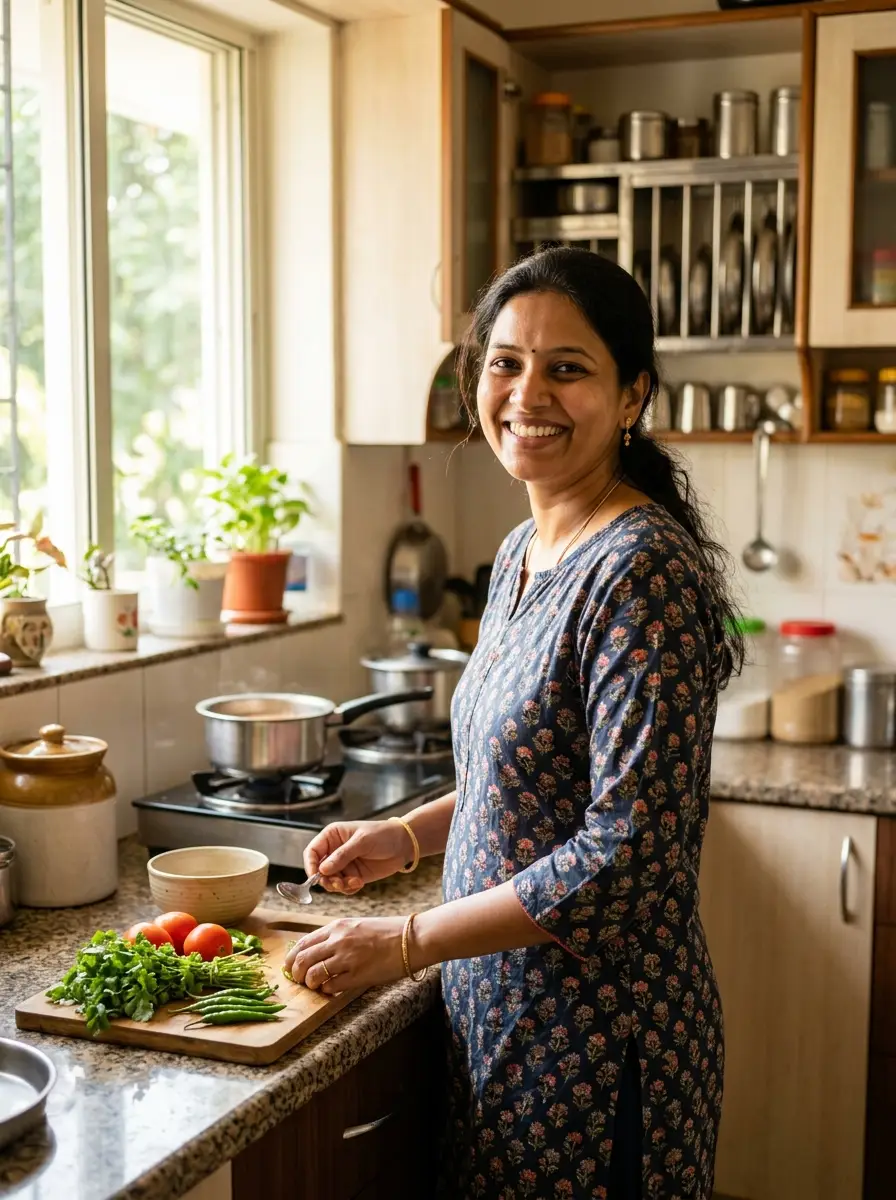
Think of a normal weekday. She is up first, packs the tiffins, serves the hot rotis, clears the plates, and finally sits down with whatever is left, often cold, often in a hurry, often with the phone or the next chore already in her hand. The tea comes in between, again and again, to keep going.
Nobody does this out of carelessness. It is love, habit and a long to-do list. But Ayurveda gently reminds us that the cook is also a member of the household whose digestion and energy need looking after. A tired, rushed body is usually where the first small signals show up: heaviness after meals, an afternoon slump, a restless mind at night.
What does Ayurveda actually say about how to eat?
In plain words: sit down, eat while the food is warm, chew properly, and eat at roughly the same times each day. Skipping a meal and then overeating later is exactly what the texts advise against.
- Eat your own meal at a fixed time, even if it means serving yourself first once in a while
- Reheat leftovers properly instead of eating them cold, and prefer fresh food when you can
- Sit, even for ten minutes, and keep the phone away
- Stop when you feel comfortably full, not stuffed
- Keep dinner lighter and earlier, and avoid lying down straight after eating
If a heavy or late meal often leaves you with a burning or sour feeling, our guides on late-dinner acidity and on acidity on an empty stomach explain the traditional view in more detail.
Is endless tea a problem, and what can replace it?
Tea is part of Indian home life, and nobody is asking you to give it up. But several strong cups a day, especially first thing on an empty stomach, are a habit many people link with that familiar burning feeling. Ayurveda would suggest having something light first, such as a few soaked almonds or a warm meal, and keeping tea to a sensible number of cups.
On other occasions a warm cup of jeera, ajwain or fennel water, or a simple herbal infusion, makes a gentle change. If you have a medical condition, check with your doctor first.
Where does rest and self-care fit into a busy home day?
Charaka names sleep (nidra) among the three supports of life, along with food and regulated living. For a homemaker, that translates into small, realistic steps rather than a big overhaul.
- A fixed bedtime, with screens put away a little earlier
- Ten quiet minutes after lunch to sit, not scroll
- A weekly warm oil massage (abhyanga) of the feet and hands, with a patch test first if your skin is sensitive
- A short walk or gentle stretching, ideally in daylight
Read more in our guides to evening routines for better sleep and to self-care rituals for working women, much of which applies to every woman running a home.
Can Rasayana herbs support a homemaker’s routine?
Rasayana is the part of Ayurveda about long-term nourishment. The classical view is that Rasayana works best when food, sleep and routine are already in place. Shatavari is traditionally valued as a nourishing herb, Guduchi (Gulvel) is a classical Rasayana, and Anantmul (Sariva) is a cooling herb traditionally used in wellness formulations.
Tanvishataa brings the three together using the classical Ghana Satva method. It is a 100% herbal tablet traditionally used to support everyday wellness, immunity and comfortable digestion, generally taken as two tablets twice a day after meals with water, or as advised by your physician. It is a companion to the habits above and not a substitute for them.
When should you see a doctor instead?
Tiredness is common in a busy home, but persistent exhaustion, unexplained weight change, breathlessness, ongoing digestive discomfort, very low mood, or symptoms that keep getting worse should be assessed by a qualified doctor, not managed with home routines alone. If you are pregnant, breastfeeding, managing a long-term condition or on regular medication, please consult your physician before adding any herbal product, and never stop prescribed treatment on your own. This article is for educational purposes only and is not a substitute for medical advice, diagnosis or treatment.
References & further reading
- Charaka Samhita, Vimana Sthana chapter 1 (Rasa Vimana) — rules of eating: warm, unctuous, right quantity, after digestion of the previous meal (classical Ayurvedic text).
- Charaka Samhita, Sutrasthana chapter 11 (Tisraishaniya) — food, sleep and regulated living as supports of life (classical Ayurvedic text).
- Ashtanga Hridaya by Vagbhata, Sutrasthana chapter 8 (Matrashitiya) — right quantity of food (classical Ayurvedic text).
- Sushruta Samhita, Chikitsa Sthana chapter 24 — daily regimen and wellbeing (classical Ayurvedic text).
- These references describe traditional Ayurvedic concepts and are not statements of medical fact.
Ayurvedic wellness tips, guides and stories — in your language.
Buy NowFrequently asked questions
Why is eating warm food so important in Ayurveda?+
Classical texts such as the Charaka Samhita advise taking food warm and freshly prepared, because it is traditionally considered easier to digest and more satisfying. Cold, stale or reheated-many-times food is traditionally avoided.
Is it bad to eat last after serving the family?+
Serving the family first is a lovely tradition. The concern is only when the meal is repeatedly late, rushed or skipped. Ayurveda recommends regular timings for everyone, including the person who cooks.
How many cups of tea are fine in a day?+
There is no single number, but Ayurveda suggests having something light before tea rather than starting the day with it on an empty stomach, and keeping the number of cups moderate. Ask your doctor if tea upsets your stomach.
Can I take Tanvishataa as a daily wellness supplement?+
Tanvishataa is traditionally used as a daily wellness supplement, generally two tablets twice a day after meals with water, or as advised by your physician. Please consult a doctor if you are pregnant, breastfeeding or on medication.
Does Tanvishataa treat tiredness or any health condition?+
No. Tanvishataa is a herbal wellness supplement traditionally used to support everyday wellness, immunity and digestion. It does not treat or cure any disease, and persistent fatigue or symptoms should be assessed by a qualified doctor.
Dr Rucha Mehendale Pai
BAMS (Ayurvedacharya) · Nadi Parikshan Expert
Dr Rucha is an Ayurvedic physician with over a decade of clinical practice in women’s health, digestion and lifestyle wellness, and the formulator behind Tanvi Herbals’ Tanvishataa. She writes to bring authentic, everyday Ayurveda to families across India.