Skin & Hair
Anantmul (Sariva): The Cooling Ayurvedic Herb Behind Skin Wellness
Key takeaways
- Anantmul (Hemidesmus indicus), classically called Sariva, is a cooling (sheeta virya) root herb traditionally associated with skin wellness and Pitta balance in Ayurveda.
- It belongs to the classical twachya (skin-nourishing) group of herbs and is traditionally described as supporting rakta prasadana (healthy blood quality), which Ayurveda closely links to skin condition.
- In Tanvishataa, Anantmul makes up 5% of the formulation's concentrated extract — a smaller but deliberate share, included specifically to balance the warming, building qualities of Shatavari and Guduchi.
- Anantmul is traditionally used within a formulation rather than alone, prepared through classical methods like kwatha (decoction) or Ghana Satva concentration — always as guided by a qualified physician.
What is Anantmul (Sariva), and where does it fit in Ayurveda?
"Doctor, I keep hearing about Shatavari and Guduchi — what about the third herb, Anantmul?" It's a fair question. Anantmul doesn't have the same brand recognition as the other two, but classical Ayurveda gives it a clear, specific job: cooling the body and traditionally supporting skin wellness — a role that neither Shatavari nor Guduchi is primarily known for.
What is Anantmul, botanically speaking?
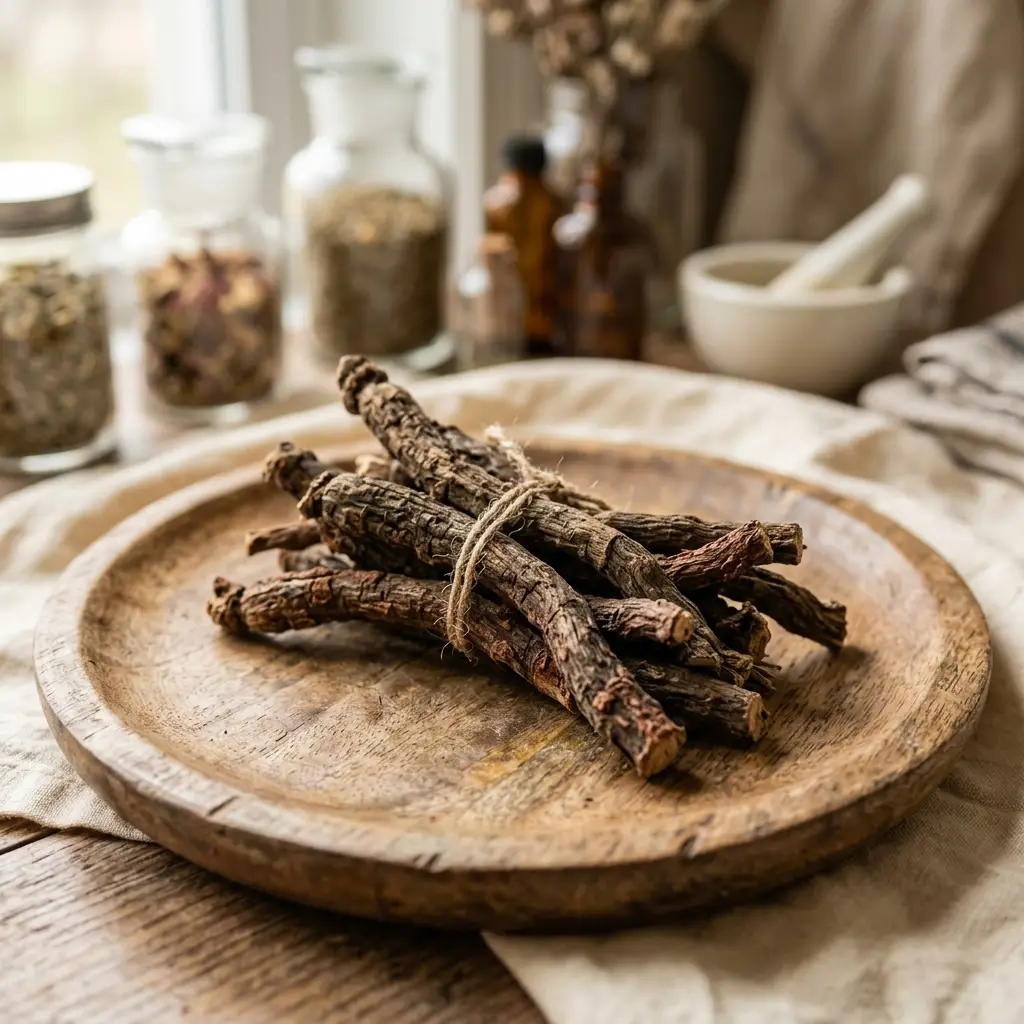
Anantmul is the common name for Hemidesmus indicus, a slender climbing plant found across much of India, whose aromatic root is the part used in Ayurveda. Classical texts call it Sariva (sometimes Sugandhi Sariva, for its faint sweet fragrance), and in English it is often referred to as Indian Sarsaparilla — though it is botanically distinct from the sarsaparilla used in Western herbalism.
What classical qualities (guna) does Anantmul carry?
In classical Ayurvedic pharmacology, Anantmul is described as sheeta virya (cooling in potency), with a madhura-tikta rasa (sweet-bitter taste) and a laghu-snigdha guna (light, mildly unctuous quality). This cooling profile is exactly why it is traditionally reached for in formulations meant to balance Pitta — the dosha classically associated with heat, inflammation and skin sensitivity.
What is Anantmul traditionally used for in Ayurveda?
Classical Ayurveda places Anantmul within the twachya varga — a traditional grouping of herbs considered supportive of healthy skin. It is also traditionally associated with rakta prasadana, meaning it is believed to support healthy blood quality, which Ayurveda treats as closely linked to how skin looks and feels.
- Traditionally used to support skin wellness, as part of the classical twachya (skin-nourishing) herb group.
- Traditionally associated with calming and balancing Pitta, the dosha linked to heat and sensitivity in the body.
- Classically described as supporting rakta prasadana — healthy blood quality, which Ayurveda connects to skin condition.
- Traditionally included in cooling formulations, especially those meant to counterbalance warming, building herbs.
- Used classically in preparations like Sarivadi Kwath (a Sariva-based decoction) and Sarivadyasava (a fermented Sariva preparation).
Why is Anantmul specifically linked to skin wellness?
Ayurveda doesn't treat skin as a separate system — it sees skin condition as connected to agni (digestion), rakta dhatu (blood tissue) and Pitta balance. A herb classified as twachya, like Anantmul, is traditionally chosen because its cooling, blood-supporting qualities are believed to show up in how the skin looks over time. This is a traditional wellness framing, not a claim of curing any skin condition or a fairness/whitening effect — Anantmul is not classically used to change skin colour, only to support the skin's natural condition and glow.
How was Anantmul traditionally prepared and used?
Classically, Anantmul root is prepared as a kwatha (decoction) — boiled down in water — or reduced further into a Ghana Satva concentrated extract, the same method used across Tanvishataa's three herbs. It also appears in classical compound formulations like Sarivadi Kwath and Sarivadyasava, almost always combined with other herbs rather than used alone, reflecting the samyoga (combination) principle common across Ayurvedic pharmacy.
What role does Anantmul play in Tanvishataa?
In Tanvishataa, Anantmul (Sariva) makes up 5% of the tablet's 100mg concentrated extract, alongside Shatavari (80%) and Guduchi (15%). It is the smallest share by design — its role is not to carry the formulation but to round it out, offsetting the warming, building qualities of Shatavari and Guduchi with its own cooling nature, and contributing its traditional association with skin wellness and Pitta balance to the overall formulation.
Who should check with a doctor before taking Anantmul-containing supplements?
As with any herbal ingredient, Anantmul isn't automatically right for everyone in every situation. If you are pregnant, breastfeeding, managing a chronic condition, or taking regular medication, speak to a qualified doctor before starting Tanvishataa or any new herbal supplement — and never stop a prescribed medicine on your own to try a herbal alternative.
When should you see a doctor rather than rely on a herb alone?
Anantmul's traditional role is supportive, not curative. If you're dealing with a persistent skin concern, an unexplained rash, or anything that doesn't improve or seems to be getting worse, that calls for a dermatologist or qualified doctor's assessment — not just a herbal supplement.
References & further reading
- Bhavaprakasha Nighantu — classifies Sariva (Anantmul) among sheeta virya (cooling), Pitta-balancing herbs traditionally associated with skin and blood quality (classical Ayurvedic herbal lexicon).
- Sushruta Samhita — Sariva referenced among herbs traditionally used in the classical twachya (skin-supportive) group (classical Ayurvedic text).
- Ashtanga Hridaya — references Sariva-based preparations among classical cooling, rakta-prasadana (blood-quality-supporting) formulations (classical Ayurvedic text).
- These references describe traditional Ayurvedic concepts and classification, and are not statements of medical fact about any specific product's clinical effect.
Ayurvedic wellness tips, guides and stories — in your language.
Buy NowFrequently asked questions
What is Anantmul used for in Ayurveda?+
Anantmul (Sariva) is traditionally used to support skin wellness, balance Pitta and support healthy blood quality. It belongs to the classical twachya (skin-nourishing) group of herbs and is almost always used within a formulation rather than alone.
Is Anantmul the same as Sariva?+
Yes. Anantmul is the common Indian name for Hemidesmus indicus, which classical Ayurvedic texts call Sariva (or Sugandhi Sariva). In English it's sometimes called Indian Sarsaparilla.
Does Anantmul help whiten or lighten skin?+
No. Anantmul is not classically used to change skin colour or for fairness/whitening. Its traditional role is supporting skin's natural condition and glow through cooling, Pitta-balancing and blood-quality-supporting qualities — not altering skin tone.
Can I take Anantmul on its own?+
Classical Ayurveda generally uses Anantmul within a combined formulation (samyoga) rather than as a standalone herb. Speak to a qualified Ayurvedic physician before taking any single herb or supplement on its own.
How is Anantmul included in Tanvishataa?+
Anantmul (Sariva) makes up 5% of Tanvishataa's 100mg concentrated extract per tablet, alongside Shatavari (80%) and Guduchi (15%) — a deliberately smaller share included to balance the formulation's overall qualities.
Dr Rucha Mehendale Pai
BAMS (Ayurvedacharya) · Nadi Parikshan Expert
Dr Rucha is an Ayurvedic physician with over a decade of clinical practice in women’s health, digestion and lifestyle wellness, and the formulator behind Tanvi Herbals’ Tanvishataa. She writes to bring authentic, everyday Ayurveda to families across India.