
Acidity & Digestion
Festival Feasting Without the Acidity: An Ayurvedic Guide

Key takeaways
- Ayurveda's classical ashta ahara vidhi visheshayatana framework (Charaka Samhita) says how much (matra) and when (kala) you eat matters as much as what you eat — festival feasting often breaks both rules at once.
- Heavy, fried festival food (guru, snigdha qualities) combined with late-night eating is traditionally described as a double hit on digestion — slowing agni while aggravating Pitta.
- Simple habits — a lighter meal earlier in the day, warm water through the day, a short walk after eating, and a gap before sleeping — are traditional ways to enjoy festival food with less after-effect.
- Guduchi's deepana-pachana quality and Anantmul's cooling nature are traditionally supportive through the festival season, when taken as part of Tanvishataa, as guided by a physician.
Why does festival season always end in acidity?
"Doctor, every Diwali I promise myself I'll eat sensibly — and every year, by the third day of sweets and fried snacks, I'm reaching for an antacid." Dr Rucha hears a version of this every festival season, from patients who eat carefully the rest of the year. It isn't a lack of willpower. It's a predictable, classical pattern — and once you see why it happens, it's easier to plan around it.
What does Ayurveda say about festival-season eating?
Classical Ayurveda doesn't only look at what you eat — it looks at a set of factors around eating, together called ashta ahara vidhi visheshayatana, the eight special factors of dietary rules described in the Charaka Samhita. Two of these are exactly what festival season tests: matra (the right quantity for you) and kala (the right time). A festival plate often has both against it — bigger portions than usual, eaten later than usual, sometimes across several sittings through the evening.
Why fried sweets and late nights hit digestion twice as hard
Most festival food shares two classical qualities: guru (heavy) and snigdha (unctuous/oily) — think ghee-rich sweets, fried snacks, and rich gravies. Ayurveda describes these qualities as naturally slower to digest, which is fine in small, timely amounts but taxing on agni (digestive fire) in festival-sized portions. Add a late dinner or a second and third helping after 9 or 10 pm, and Ashtanga Hridaya's guidance on ratricharya (night routine) — favouring a lighter, earlier dinner — is doubly broken: heavy food arrives when agni is naturally winding down for the day. The result many people notice by the next morning is exactly this combination: heaviness, bloating, and a burning sensation as Pitta reacts to the richness and the late hour together.
How to enjoy festival food without the after-effects
None of this means skipping the festival — Ayurveda's approach is about balance around the feast, not deprivation during it.
- Keep your day meal light before a big evening feast — don't skip it entirely (an empty stomach followed by a heavy meal is harder on agni, not easier).
- Sip warm water through the day rather than cold drinks, especially around a rich meal — cold liquids are traditionally described as further dampening agni.
- Take smaller portions of fried sweets and snacks rather than cutting them out — samyoga (moderation) traditionally matters more than total avoidance.
- Take a short, gentle walk (traditionally called shatapavali, roughly a hundred steps) after the meal rather than sitting or lying down immediately.
- Leave at least 2–3 hours between your last bite and sleep, in line with Ashtanga Hridaya's ratricharya guidance on lighter, earlier dinners.
- Keep your regular wake and sleep times through the festival days — dinacharya (daily routine) staying steady helps agni recover faster between celebrations.
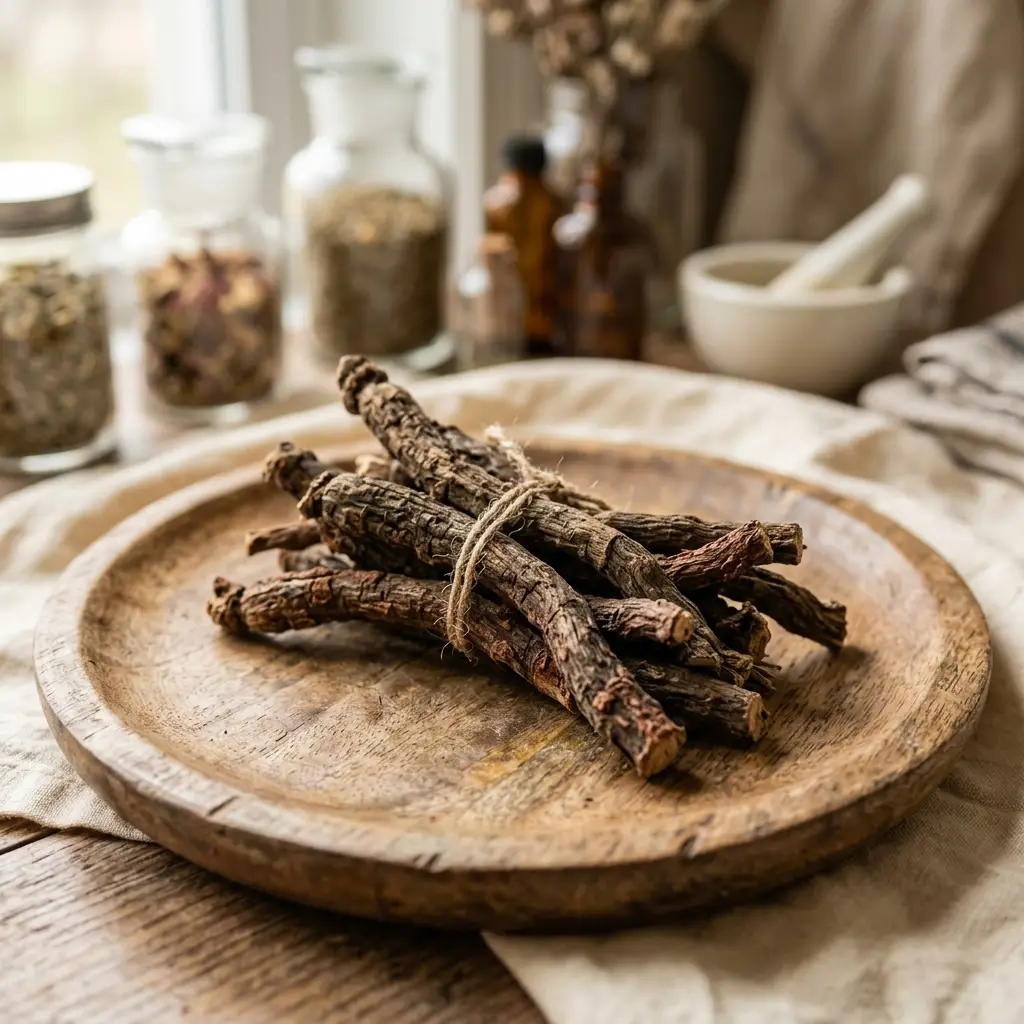
Guduchi's traditional role in supporting digestion after festival meals
Guduchi (Tinospora cordifolia), one of the three herbs in Tanvishataa, is classically described as deepana-pachana — traditionally supportive of digestive fire and the digestion of food already eaten. This is exactly the kind of everyday load festival season places on the gut, which is why Guduchi's traditional role fits naturally into a festival-season routine, alongside — not instead of — the habits above.
Anantmul's cooling role when festival food turns up the heat
Anantmul (Sariva), the third herb in Tanvishataa, carries a sheeta virya (cooling) classical quality, traditionally used to help balance Pitta — the dosha most aggravated by fried, spiced, and richly sweetened festival food eaten late into the evening. Its traditional role is to cool and balance, not to counteract unlimited quantities of festival food.
Where Tanvishataa fits during festival season
Tanvishataa is a daily Ayurvedic wellness tablet, not a festival-night remedy — its Shatavari, Guduchi and Anantmul are traditionally used for ongoing digestive and wellness support, not for undoing a single heavy meal. Taken as part of a regular routine and as advised by a physician, it is intended to sit alongside the habits above, not replace them.
Who should be careful during festival season
If you are pregnant, breastfeeding, or managing a chronic condition such as diabetes, blood pressure, or thyroid, festival sweets and rich food deserve extra mindfulness — continue your prescribed treatment exactly as advised, and speak to your doctor about any festival-season diet adjustments before making them. This applies whether or not you take any herbal supplement.
When festival indigestion needs more than home remedies
Occasional festival-season heaviness or a mild burning sensation that settles within a day or two is common and not usually a cause for concern. See a doctor rather than relying on home remedies alone if you notice persistent or severe burning, vomiting blood, black or tarry stools, unintended weight loss, difficulty swallowing, or chest pain — these need proper medical evaluation, festival season or not.
References & further reading
- Charaka Samhita, Vimana Sthana, Chapter 1 — describes ashta ahara vidhi visheshayatana, the eight classical factors of dietary rules, including matra (quantity) and kala (time of eating) (classical Ayurvedic text).
- Ashtanga Hridaya — describes ratricharya (night routine) guidance favouring lighter, earlier dinners, and dinacharya (daily routine) principles for steady agni (classical Ayurvedic text).
- Sushruta Samhita — references agni and ahara (food) as central to healthy digestion within classical Ayurvedic physiology (classical Ayurvedic text).
- These references describe traditional Ayurvedic concepts and classification, and are not statements of medical fact about any specific product's clinical effect.
Ayurvedic wellness tips, guides and stories — in your language.
Buy NowFrequently asked questions
Why does acidity spike so much during festivals?+
Classical Ayurveda points to two factors breaking together: matra (eating more than your usual quantity) and kala (eating later than usual, often across multiple sittings). Combined with heavy, fried, richly sweetened food, this traditionally taxes agni (digestive fire) and aggravates Pitta, which many people experience as burning and heaviness.
Is it okay to skip meals before a big festival feast?+
Ayurveda doesn't recommend this. An empty stomach followed by a heavy meal is traditionally considered harder on agni, not easier. A light, timely day meal before the feast is the traditionally preferred approach.
What can I do right after a heavy festival meal to feel better?+
A short, gentle walk (traditionally called shatapavali) rather than lying down immediately, sipping warm water instead of cold drinks, and leaving a gap of a few hours before sleeping are simple traditional habits — not a treatment for any digestive condition.
Does Tanvishataa treat festival acidity?+
No. Tanvishataa is a daily Ayurvedic wellness tablet, not a remedy for a single heavy meal or an acidity treatment. Its Shatavari, Guduchi and Anantmul are traditionally used for ongoing digestive and wellness support as part of a regular routine, alongside sensible festival-eating habits, and as advised by a physician.
When should festival-season digestive discomfort see a doctor?+
If burning or heaviness is persistent or severe, or if you notice vomiting blood, black stools, unintended weight loss, difficulty swallowing, or chest pain, see a doctor promptly rather than relying on home remedies — these symptoms need proper medical evaluation.
Dr Rucha Mehendale Pai
BAMS (Ayurvedacharya) · Nadi Parikshan Expert
Dr Rucha is an Ayurvedic physician with over a decade of clinical practice in women’s health, digestion and lifestyle wellness, and the formulator behind Tanvi Herbals’ Tanvishataa. She writes to bring authentic, everyday Ayurveda to families across India.