
Women's Health
Shatavari: The “Queen of Herbs” for Women’s Everyday Wellness

Key takeaways
- Shatavari (Asparagus racemosus) is a classical Rasayana, so respected that Ayurveda nicknames it the “queen of herbs”.
- It is described as sheeta (cooling) and nourishing — traditionally used to support women’s everyday energy, calm and balance.
- In Ayurveda, women’s wellness is approached as whole-body balance over the seasons of life, not as a quick fix.
- Shatavari is the lead herb in Tanvishataa; use it within a daily routine, and consult your physician during pregnancy, breastfeeding or any medical condition.
Why is Shatavari called the “queen of herbs”?
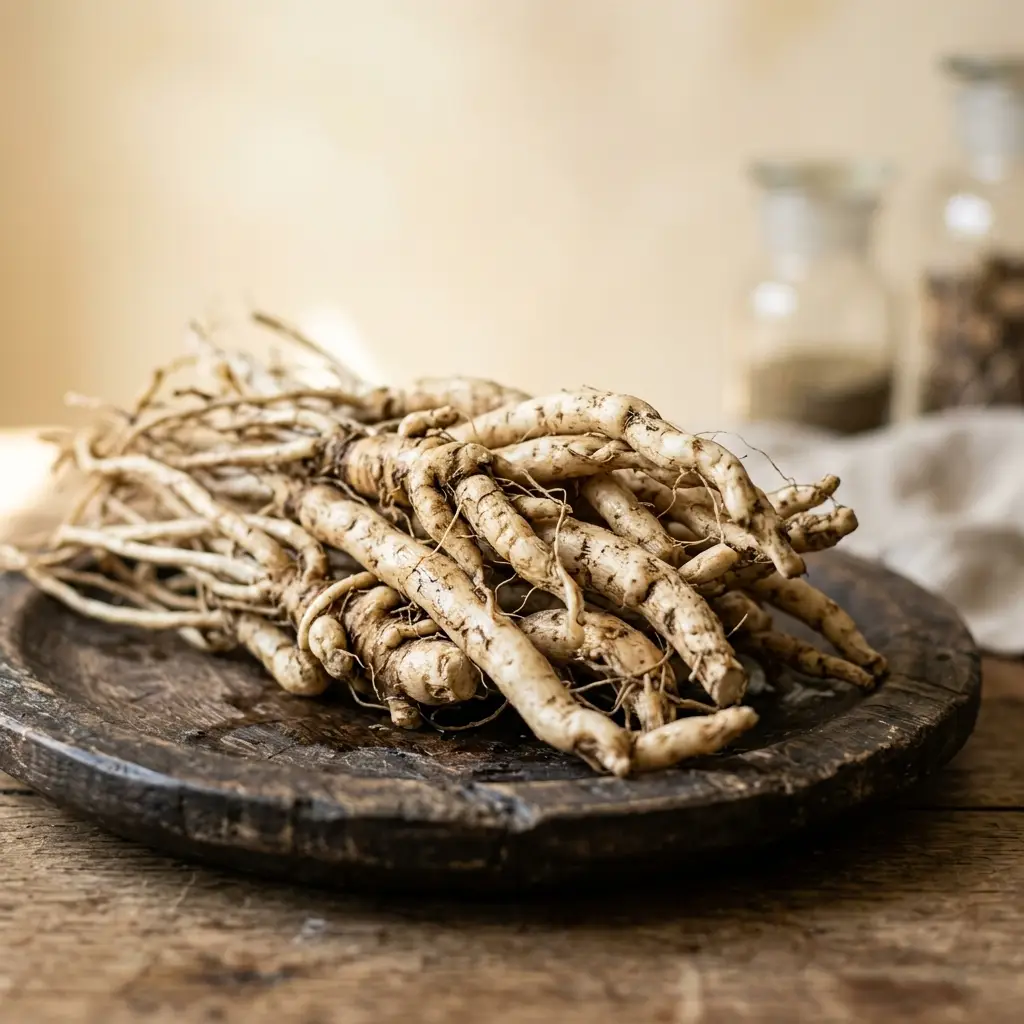
The name says a great deal. In Sanskrit, Shatavari is often translated as “she who has a hundred roots” — and, by tradition, “a hundred forms of nourishment”. Ayurveda gives it a place of honour for women much like Ashwagandha is honoured more broadly, which is why it is so often called the queen of herbs.
It is the lead herb in Tanvishataa, making up the largest share of the formulation — a deliberate choice, given how central it is to women’s wellness in Ayurveda.
What do the classical texts say about Shatavari?
Across Ayurveda’s foundational works, Shatavari is described as a Rasayana — a rejuvenating, nourishing herb — and as sheeta, cooling in nature. The classical physicians grouped it among herbs that traditionally support strength (bala) and the body’s nourishing, fluid qualities, which is partly why it has long been associated with women’s health through different life stages.
How does Shatavari fit a modern woman’s day?
Most women carry several days inside one — work, home, family, care for others — and energy can dip long before the day is done. Ayurveda does not treat this as a single problem to be fixed but as a question of balance: steady digestion, calm nerves, and tissues that are well nourished rather than depleted. Shatavari is traditionally used to support exactly this kind of everyday, whole-body balance.
Cooling, for a heated routine
Because Shatavari is considered sheeta (cooling), it is traditionally favoured by those who feel the “heat” of a hurried, Pitta-aggravating lifestyle — rushed meals, long hours and little rest.
Nourishing, for everyday depletion
As a Rasayana, Shatavari is traditionally used to support the body’s nourishment over time — the slow, steady kind of care Ayurveda prizes, rather than a stimulant-style lift.
- A classical Rasayana — traditionally rejuvenating and nourishing
- Sheeta (cooling) in nature — suited to a heated, hurried lifestyle
- Long associated with women’s wellness across life stages
- Best used gently and consistently, as part of a routine
How is Shatavari taken in Tanvishataa?
Traditionally Shatavari was taken as a powder, often with warm milk. Tanvishataa makes it convenient by combining Shatavari with Guduchi and Anantmul using the classical “Ghana Satva” extraction, concentrated into a small daily tablet — generally taken as two tablets twice a day after meals with water, or as advised by your physician.
It is a gentle daily companion, not an overnight remedy. Like all Rasayana herbs, it is meant to work quietly over time alongside good food, rest and routine.
When should a woman see a doctor instead?
A wellness herb supports a healthy routine — it is not a substitute for medical care. Persistent fatigue, significant changes in your monthly cycle, unusual pain, or any symptom that worries you should be assessed by a qualified doctor rather than managed with a supplement. If you are pregnant, breastfeeding, trying to conceive, or on regular medication, please consult your physician before taking any herb, and never stop prescribed treatment on your own.
References & further reading
- Charaka Samhita — Shatavari among Rasayana and balya (strength-supporting) herbs (classical Ayurvedic text).
- Sushruta Samhita — Shatavari’s cooling, nourishing qualities (classical Ayurvedic text).
- Ashtanga Hridaya by Vagbhata — Rasayana principles and daily nourishment (classical Ayurvedic text).
- These references describe traditional Ayurvedic concepts and are not statements of medical fact.
Ayurvedic wellness tips, guides and stories — in your language.
Buy NowFrequently asked questions
Why is Shatavari called the queen of herbs?+
Because Ayurveda holds it in special esteem for women’s wellness — much as Ashwagandha is honoured more broadly. Its Sanskrit name is traditionally read as “she who has a hundred roots / a hundred forms of nourishment”.
Is Shatavari only for women?+
It is most associated with women’s wellness, but as a Rasayana it is traditionally used by anyone seeking gentle, cooling nourishment. Tanvishataa is formulated for the whole family’s everyday wellness.
Can I take Shatavari during pregnancy or breastfeeding?+
Shatavari is traditionally valued during these stages, but you should always consult your physician before taking any herb while pregnant, breastfeeding or trying to conceive. Do not self-prescribe.
Does Shatavari treat menstrual or hormonal problems?+
No. Shatavari is a wellness herb traditionally used to support everyday balance — it is not a treatment for any medical condition. Persistent menstrual or other health concerns should be assessed by a doctor.
How is Shatavari taken in Tanvishataa?+
Tanvishataa combines Shatavari with Guduchi and Anantmul in a daily tablet, generally taken as two tablets twice a day after meals with water, or as advised by your physician.
Dr Rucha Mehendale Pai
BAMS (Ayurvedacharya) · Nadi Parikshan Expert
Dr Rucha is an Ayurvedic physician with over a decade of clinical practice in women’s health, digestion and lifestyle wellness, and the formulator behind Tanvi Herbals’ Tanvishataa. She writes to bring authentic, everyday Ayurveda to families across India.