
Wellness
Ageing Parents at Home: A Gentle Ayurvedic Daily Routine
Key takeaways
- Classical Ayurveda describes old age (vriddhavastha) as a Vata-dominant life stage — one traditional reason elders often do well with warmer food, more rest, and a steadier routine than they needed in midlife.
- Digestive fire (agni) is traditionally considered to soften with age, so smaller, warmer, freshly cooked meals are traditionally preferred over heavy, cold, or fried food.
- A simple, unhurried daily rhythm — regular wake and sleep times, gentle movement, and traditional oil massage (abhyanga) — is described in classical texts as supportive during the later years.
- Rasayana herbs such as Shatavari and Guduchi have a traditional role in supporting nourishment and vitality in later life — one reason they feature in Tanvishataa's formulation, alongside, never instead of, a doctor's care for any diagnosed condition.
Why does Ayurveda pay special attention to the later years?
A patient's daughter asked me this recently: "Doctor, my mother is in her seventies now — is there anything gentle we can do for her, beyond her regular medicines?" It's a question I hear often, and a caring one. Classical Ayurveda has always paid close attention to this stage of life, describing it not as decline to be feared, but as a distinct phase with its own needs.
The Charaka Samhita broadly describes life in three stages: bala (childhood, associated with Kapha), madhya or yauvana (adulthood, associated with Pitta), and vriddhavastha (old age, associated with Vata). This classification is traditional and descriptive — it is not a diagnosis, and it doesn't mean every elder needs the same care. But it does offer a useful lens: as Vata's qualities — dryness, lightness, mobility, coolness — become more prominent with age, routines that are warm, steady, and grounding are traditionally considered supportive.
What changes in digestion as we age?
Classical texts, including the Ashtanga Hridaya, describe agni (digestive fire) as naturally becoming gentler with age. This is a traditional concept, not a medical diagnosis — but it's a familiar pattern many families notice: a parent who once ate heavy, rich food comfortably may now prefer smaller portions, simpler preparations, and warmer meals eaten at regular times.
What does a gentle daily routine look like?
Ayurveda's approach to the later years is rarely dramatic — it's a handful of steady habits, repeated daily:
- Waking and sleeping at consistent times, rather than irregular hours — Vata is traditionally described as settling with routine.
- Warm, freshly cooked, easily digestible meals at regular times, rather than large or heavy meals eaten irregularly.
- Traditional warm oil self-massage (abhyanga), classically described as grounding and comforting, particularly valued in Vata-dominant life stages.
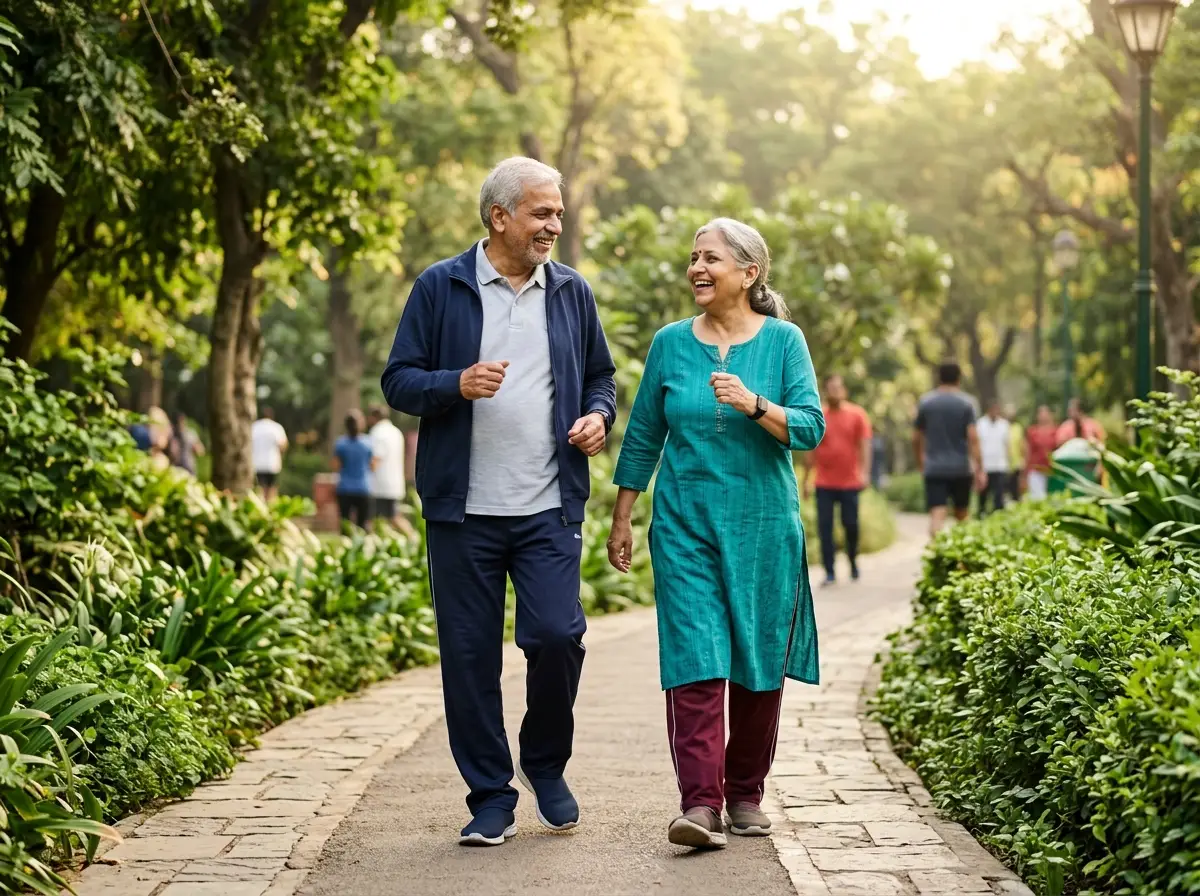
- Gentle movement such as a short daily walk, rather than vigorous exercise, matched to what feels comfortable.
- Keeping warm, especially in cooler months or air-conditioned rooms, since Vata is traditionally aggravated by cold and dryness.
- Avoiding long daytime naps immediately after meals, which classical dinacharya guidance generally discourages.
What role do Rasayana herbs traditionally play in later life?
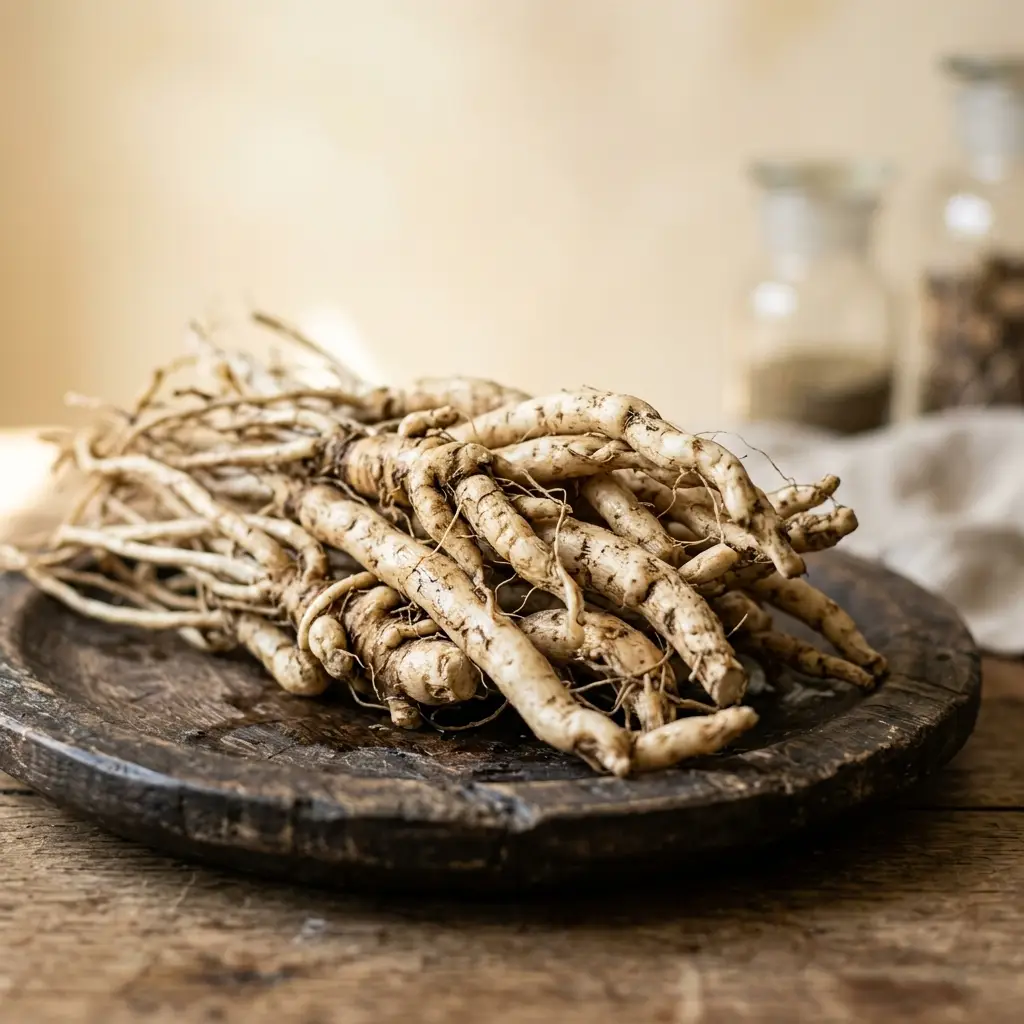
The Charaka Samhita devotes an entire section (the Rasayana Adhyaya) to herbs traditionally used to support nourishment, strength, and vitality — with old age specifically mentioned as a stage where such support was traditionally valued. This is a classical concept describing traditional use, not a claim that any herb reverses ageing or treats an age-related disease. Shatavari is classically described as a Rasayana with a nourishing, balya (strength-supporting) quality; Guduchi is valued for its Rasayana status alongside a traditional deepana-pachana (digestion-kindling) role, which may be gently supportive as agni softens with age.
What role can Tanvishataa play in this routine?
Tanvishataa is not a treatment for any age-related disease, and it does not reverse or slow ageing. What it offers is traditional herbal support — Shatavari (80% of the concentrated extract) for its classical Rasayana role, Guduchi (15%) for traditional deepana-pachana support, and Anantmul (5%) — used consistently as part of a daily routine, alongside, never instead of, a doctor's care for any condition your parent may be managing.
Who should be careful, or check with a doctor first?
If your parent is managing a chronic condition — such as blood pressure, diabetes, thyroid, heart, kidney, or joint-related conditions — or takes regular prescribed medication, speak to their doctor before starting Tanvishataa or any new herbal supplement. Continue all prescribed treatment; herbal routine support is not a substitute for medical care, and no medicine should be stopped without a doctor's advice.
When should you see a doctor rather than rely on routine alone?
See a doctor promptly for sudden confusion or disorientation, chest pain or breathlessness, a fall or fainting spell, persistent or worsening pain, appetite loss lasting more than a few days, unexplained weight loss, or blood in the stool or vomit. These need proper medical assessment — a gentle daily routine is a helpful complement to good care, never a substitute for it.
References & further reading
- Charaka Samhita — describes the three broad life stages (bala, madhya/yauvana, vriddhavastha) and their associated doshas, and devotes a dedicated section (Rasayana Adhyaya) to herbs traditionally used for nourishment and vitality, including in old age (classical Ayurvedic text).
- Ashtanga Hridaya by Vagbhata — discusses dinacharya (daily routine) and ahara (diet) guidance, including warm, easily digestible food and regular routine, traditionally considered supportive in Vata-dominant life stages (classical Ayurvedic text).
- Sushruta Samhita — references the traditional classification of life stages and doshic changes across the lifespan in classical Ayurvedic physiology (classical Ayurvedic text).
- These references describe traditional Ayurvedic concepts and classification, and are not statements of medical fact about treating, reversing, or preventing any age-related disease or condition.
Ayurvedic wellness tips, guides and stories — in your language.
Buy NowFrequently asked questions
What does Ayurveda traditionally say about ageing?+
Classical Ayurveda describes old age (vriddhavastha) as a Vata-dominant life stage, following childhood (Kapha) and adulthood (Pitta). This is a traditional classification, not a diagnosis, and is used to guide gentle, supportive daily habits rather than to treat any disease.
Why do elders traditionally need warmer, lighter food?+
Classical texts describe agni (digestive fire) as naturally becoming gentler with age. Warm, freshly cooked, smaller meals eaten at regular times are traditionally preferred over heavy, cold, or fried food during this life stage.
Is oil massage (abhyanga) helpful for joint stiffness in elderly parents?+
Traditional oil self-massage is described in classical dinacharya as grounding and comforting, particularly valued in Vata-dominant life stages. It is not a treatment for arthritis or any diagnosed joint condition — persistent joint pain or stiffness should be evaluated by a doctor.
Can elderly parents take Tanvishataa alongside their regular medicines?+
Speak to their doctor first, especially if they manage a chronic condition or take regular medication. Tanvishataa is a traditional herbal supplement, not a replacement for prescribed treatment, and all existing medicines should be continued as advised.
What's the simplest first step for an elderly parent's daily routine?+
Consistency: waking, eating, and sleeping at roughly the same times each day. Classical Ayurveda considers this simple regularity one of the most supportive habits during the Vata-dominant later years.
Dr Rucha Mehendale Pai
BAMS (Ayurvedacharya) · Nadi Parikshan Expert
Dr Rucha is an Ayurvedic physician with over a decade of clinical practice in women’s health, digestion and lifestyle wellness, and the formulator behind Tanvi Herbals’ Tanvishataa. She writes to bring authentic, everyday Ayurveda to families across India.