
Wellness
Guduchi (Gulvel) A to Z: Traditional Uses, Qualities and Who It Suits

Key takeaways
- Guduchi (Tinospora cordifolia, also called Gulvel or Giloy) is classically described with a tikta-kashaya rasa (bitter-astringent taste) and a laghu-snigdha guna (light, unctuous quality), and is traditionally classified as tridoshic.
- Beyond its well-known reputation as an immunity/Rasayana herb, Guduchi is traditionally used more broadly — to support healthy digestion (deepana-pachana) and, per classical texts, to support Pitta balance.
- Because it is tridoshic and laghu (light), classical texts traditionally describe it as suiting a wide range of constitutions — though the principle of matra (the right dose for the right person) still applies, best confirmed with a qualified Ayurvedic physician.
- Guduchi is the second herb in Tanvishataa, making up 15% of the tablet's concentrated extract, alongside Shatavari (80%) and Anantmul (5%).
What is Guduchi, beyond "the immunity herb"?
"Doctor, isn't Guduchi just for immunity?" It's a fair question — Guduchi's reputation as a Rasayana for seasonal wellness is well earned. But in classical Ayurveda, its traditional profile is broader than any single label. This guide takes Guduchi A to Z, the same way we've covered Shatavari and Anantmul — its identity, qualities, traditional uses, and who it suits.
What is Guduchi, botanically speaking?
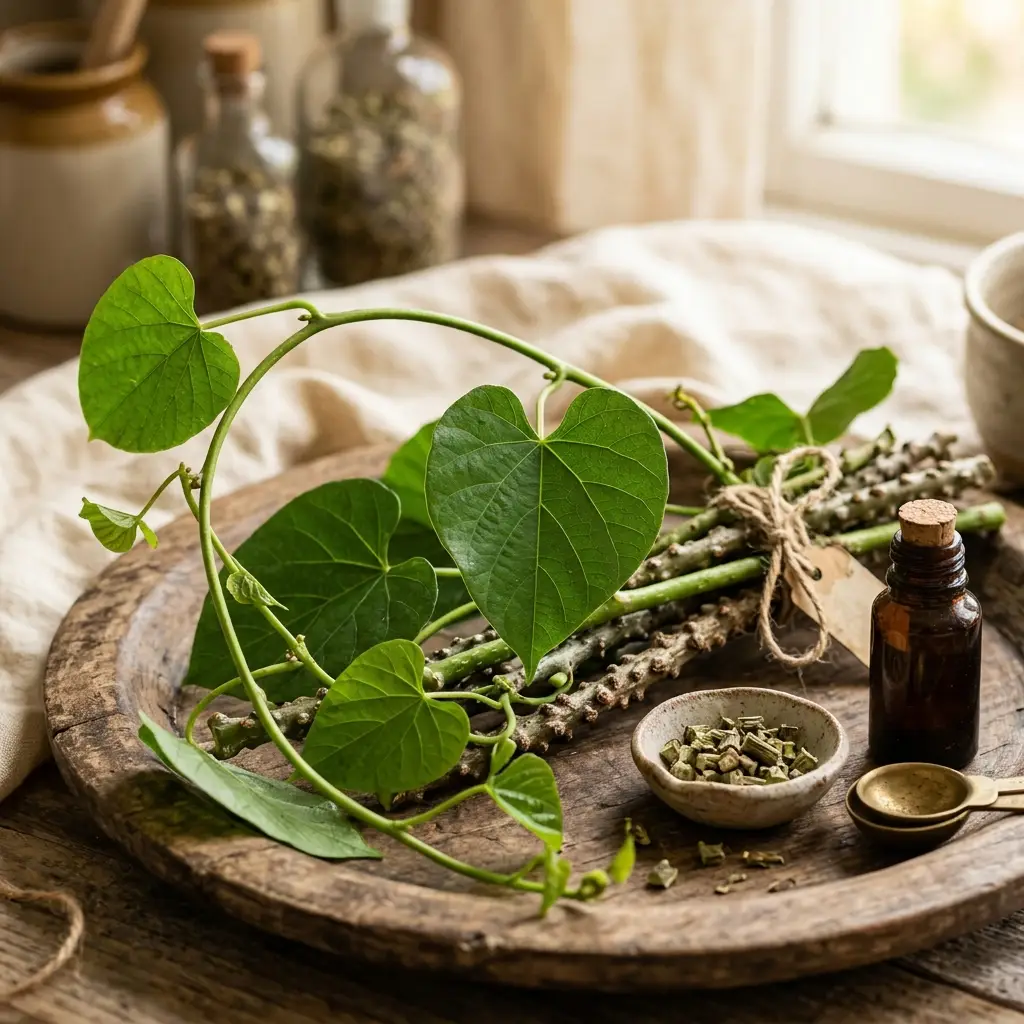
Guduchi is the Sanskrit name for Tinospora cordifolia, a leafless climbing shrub found across India, commonly seen winding up neem or mango trees. In Marathi it is called Gulvel, and in Hindi, Giloy. The stem is the part traditionally used in Ayurveda. Its classical epithet, Amruta — "the nectar of immortality" — reflects how highly ancient physicians regarded it.
What classical qualities (guna) does Guduchi carry?
Classical Ayurvedic pharmacology describes Guduchi's rasa (taste) as tikta-kashaya (bitter-astringent), its guna (quality) as laghu-snigdha (light and unctuous), with a vipaka (post-digestive effect) that is traditionally described as madhura (sweet). This particular combination is part of why Guduchi is traditionally classified as tridoshic — considered gentle enough to help balance Vata, Pitta and Kapha together, rather than favouring or aggravating any single dosha.
What is Guduchi traditionally used for, beyond immunity?
Classical Ayurveda approaches Guduchi as a broadly balancing herb rather than a single-purpose remedy. Its traditional roles include:
- Traditionally used as a Rasayana — to support rejuvenation and the body's natural resilience over time, particularly through seasonal transitions.
- Valued as tridoshic — traditionally used to help balance Vata, Pitta and Kapha together, unlike many herbs classical texts reserve for a single dosha.
- Traditionally used to support healthy digestion, owing to its deepana-pachana (digestion-kindling) quality described in classical pharmacology.
- Classical texts associate Guduchi with Pitta balance, which traditional Ayurveda connects to skin health from within — this describes a traditional association, not a claim about treating any skin condition.
- Used in classical preparations such as Guduchi Churna (dried powder), Guduchi Satva (a starch-like extract obtained by crushing and settling the fresh stem), and combination formulations like Samshamani Vati.
Who does Guduchi traditionally suit?
Because Guduchi is tridoshic and laghu (light on digestion), classical Ayurveda traditionally considers it suitable across a wide range of constitutions — including people with relatively delicate digestion, who may find heavier Rasayana herbs less comfortable. It is especially associated with ritu sandhi, the junction between seasons, when many people feel run down. As with any herb, individual constitution (prakriti) varies, so it's worth confirming what suits you specifically with a qualified Ayurvedic physician rather than assuming any single herb fits everyone.
How was Guduchi traditionally prepared?
Classically, Guduchi was used as fresh stem juice (swarasa), a decoction (kwatha or kadha, often the well-known "boil the stem" household remedy), a dried powder (churna), or processed into Guduchi Satva — a distinct starch-like extract made by crushing the fresh stem in water and letting it settle. It was rarely used alone, and was traditionally combined with other herbs in classical formulations.
What role does Guduchi play in Tanvishataa?
In Tanvishataa, Guduchi is the second herb, making up 15% of the tablet's 100mg concentrated extract, alongside Shatavari (80%) and Anantmul (5%). It is prepared through the classical Ghana Satva method — reducing the herb's decoction into a concentrated solid extract — the same traditional approach used for all three herbs in the formulation.
Who should check with a doctor before taking Guduchi?
Guduchi isn't automatically right for every situation. If you are pregnant, breastfeeding, managing a chronic condition, on regular medication, or living with an autoimmune condition, speak to a qualified doctor before starting Tanvishataa or any new herbal supplement — and never stop a prescribed medicine on your own to try a herbal alternative.
When should you see a doctor rather than rely on a herb alone?
Guduchi's traditional role is supportive, not curative. A high or persistent fever, a worsening infection, breathlessness, or any symptom that concerns you needs assessment by a qualified doctor — not just a herbal supplement.
References & further reading
- Charaka Samhita — Guduchi among the Rasayana dravyas (classical Ayurvedic text).
- Sushruta Samhita — Guduchi (Amruta) and its traditional classical qualities (classical Ayurvedic text).
- Ashtanga Hridaya by Vagbhata — Guduchi in the context of ritucharya (seasonal routine) and dosha balance (classical Ayurvedic text).
- These references describe traditional Ayurvedic concepts and classification, and are not statements of medical fact about any specific product's clinical effect.
Ayurvedic wellness tips, guides and stories — in your language.
Buy NowFrequently asked questions
What is Guduchi used for in Ayurveda?+
Guduchi is traditionally used as a tridoshic Rasayana — to support the body's natural resilience, healthy digestion, and Pitta balance over time, as part of a routine rather than a single-purpose remedy.
Is Guduchi the same as Giloy and Gulvel?+
Yes — they are three names for the same herb, Tinospora cordifolia. "Giloy" is the common Hindi name, "Guduchi" the Sanskrit name, and "Gulvel" the Marathi name.
Does Guduchi only support immunity?+
No. While it's best known for supporting immunity and seasonal wellness, classical texts also describe Guduchi's traditional role in supporting digestion and Pitta balance. It is a broadly balancing, tridoshic herb rather than a single-purpose one.
Can Guduchi be taken every day?+
It is traditionally used as a daily Rasayana. In Tanvishataa it is generally taken as two tablets twice a day after meals, or as advised by your physician. Consult a doctor if you are pregnant, breastfeeding, managing a chronic condition, or on medication.
How is Guduchi included in Tanvishataa?+
Guduchi makes up 15% of Tanvishataa's 100mg concentrated extract per tablet, prepared through the classical Ghana Satva method, alongside Shatavari (80%) and Anantmul (5%).
Dr Rucha Mehendale Pai
BAMS (Ayurvedacharya) · Nadi Parikshan Expert
Dr Rucha is an Ayurvedic physician with over a decade of clinical practice in women’s health, digestion and lifestyle wellness, and the formulator behind Tanvi Herbals’ Tanvishataa. She writes to bring authentic, everyday Ayurveda to families across India.