
Wellness
What ‘GMP Certified’ and ‘100% Herbal’ Really Mean on an Ayurvedic Label

Key takeaways
- GMP (Good Manufacturing Practices) is a standard for how a product is made — clean premises, tested raw materials, documented batches and traceability. It is not a statement about therapeutic effect.
- In India, Ayurvedic products are manufactured under a licence from the State Licensing Authority (commonly the state FDA) under the Drugs and Cosmetics Act, 1940, with GMP requirements set out in Schedule T of the Rules. A manufacturing licence is different from clinical-trial evidence for a specific benefit.
- ‘100% herbal’ generally means the ingredients are botanical rather than synthetic — but it is only as meaningful as the ingredient list behind it. Ask which herb, which part, and how much.
- Neither phrase means a product is suitable for everyone. Pregnancy, lactation, chronic illness and ongoing medication still call for a physician’s guidance.
Why do these two phrases appear on almost every Ayurvedic pack?
"Doctor, it says GMP certified and 100% herbal — so it must be the best, no?" I hear a version of this in the clinic regularly. It is a fair instinct, but these two phrases answer narrower questions than most people assume. One tells you about the factory. The other tells you about the category of ingredients. Neither tells you how a product will work for your body, and a label that lets you believe otherwise deserves a second look.
What does ‘GMP certified’ actually mean?
GMP stands for Good Manufacturing Practices. It is a quality framework covering how a product is made: the cleanliness and layout of the premises, the identification and testing of raw materials, trained staff, written procedures, batch records, proper storage and labelling, and the ability to trace a finished pack back to the batch it came from.
In India, the GMP requirements for Ayurvedic, Siddha and Unani medicines are laid down in Schedule T of the Drugs and Cosmetics Rules, 1945. In simple words, GMP is about consistency and hygiene — that what is written on the label is what was made, and that the same care went into every batch.
What does GMP not tell you?
This is the part most labels leave out. GMP is a process standard, not an outcome standard. It says the product was made carefully; it does not say that the product will produce any particular result in any particular person.
- It does not mean the product has been proven in a clinical trial for a specific benefit.
- It does not mean the product is suitable for every person or every stage of life.
- It does not replace advice from your physician, especially if you take regular medicines.
What is a state manufacturing licence, and how is it different from ‘approval’?
Ayurvedic products in India are made under a manufacturing licence granted by the State Licensing Authority — often referred to as the state FDA or the state AYUSH licensing office — under the Drugs and Cosmetics Act, 1940. The licence permits a particular manufacturer to make particular formulations at a particular, inspected facility.
It helps to be clear about what this is not. It is not the same as approval from the US FDA, and it is not a modern clinical-trial approval for a claimed benefit. It is a manufacturing licence: a sign that the maker is legally authorised and inspected, which is a useful baseline of trust, but not proof of how well a product works.
What does ‘100% herbal’ really promise?
In everyday use, ‘100% herbal’ signals that the active ingredients come from plants rather than being synthetic chemicals. That is a genuine and useful distinction. But it is a description of origin, not a guarantee of quality, strength or safety — many strong plants are herbal, and ‘natural’ does not automatically mean ‘right for everyone’.
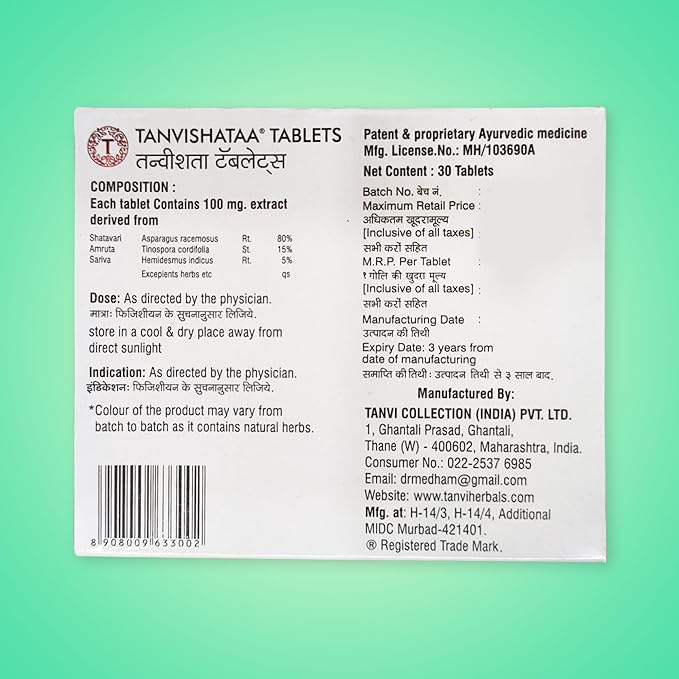
It is also a claim that is only as reliable as the ingredient list behind it. A trustworthy pack names each herb, the plant part used (root, stem, leaf) and ideally the proportion, instead of hiding behind ‘proprietary blend’. Tanvishataa states its composition plainly: Shatavari (Asparagus racemosus, root) 80%, Guduchi/Gulvel (Tinospora cordifolia, stem) 15% and Anantmul (Hemidesmus indicus, root) 5%, in a 100mg concentrated Ghana Satva extract per tablet.
How can you read a label with these phrases in mind?
- Look for the manufacturer’s name and address, and a state manufacturing licence number.
- Check that the ingredient list names each herb, the part used and the quantity.
- Look for a batch number, manufacturing date and expiry date.
- Treat words like ‘GMP certified’ and ‘100% herbal’ as a starting point for questions, not as the answer.
Where does Tanvishataa fit in?
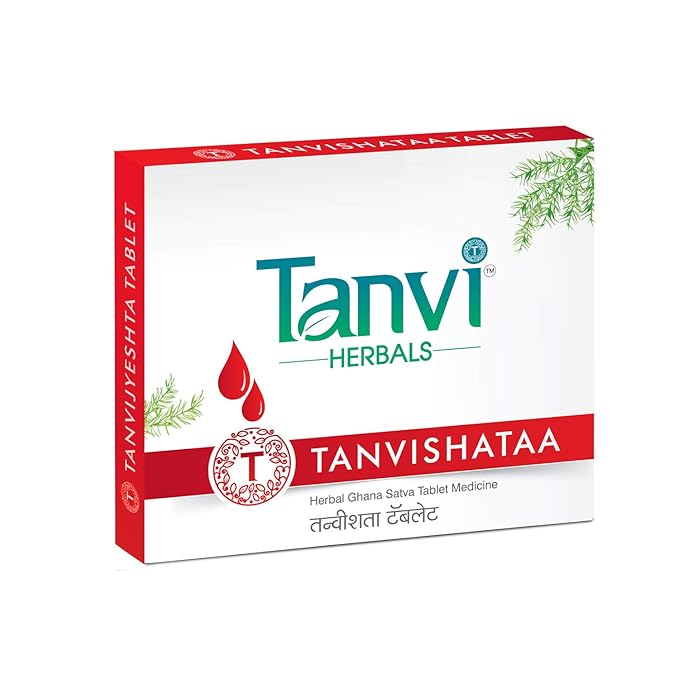
Tanvishataa is manufactured by Tanvi Collection India Pvt Ltd and carries the ‘FDA Approved & GMP Certified’ marking on its pack. As explained above, that refers to licensed, GMP-standard manufacturing — the baseline you should expect — and not to a promise of results. Its herbs, parts and proportions are stated openly, so you can judge the formulation for yourself and discuss it with your physician.
When should you speak to a doctor?
A well-made herbal product is still a supplement, not a substitute for medical care. If you are pregnant, breastfeeding, managing a chronic condition or taking regular medication, please consult a qualified Ayurvedic physician before starting Tanvishataa or any new supplement, and never stop a prescribed medicine on your own. If a symptom is persistent, severe or getting worse, see a doctor rather than relying on a supplement. For personal guidance, you can Book Your Consultation with Dr Rucha on WhatsApp: https://wa.link/3cz6h2.
This information is for educational purposes only and is not a substitute for medical advice. Please consult a qualified Ayurvedic physician before use, especially during pregnancy, lactation, chronic illness, or ongoing medication.
References & further reading
- Sushruta Samhita, Sutra Sthana — guidance on the collection, selection and storage of medicinal herbs, emphasising the right plant, part, season and place (classical Ayurvedic text).
- Charaka Samhita, Sutra Sthana — the classical emphasis on the quality and preparation of the medicine as part of sound practice (classical Ayurvedic text).
- Ashtanga Hridaya, Sutra Sthana — the section on knowledge of medicinal substances and their proper handling (classical Ayurvedic text).
- Drugs and Cosmetics Act, 1940, and Drugs and Cosmetics Rules, 1945 (Schedule T — Good Manufacturing Practices for Ayurvedic, Siddha and Unani medicines), Government of India.
- These references describe traditional concepts and the regulatory framework, and are not statements of medical fact about any specific product’s clinical effect.
Ayurvedic wellness tips, guides and stories — in your language.
Buy NowFrequently asked questions
What does GMP certified mean for an Ayurvedic product?+
GMP means the product is made following Good Manufacturing Practices — clean premises, checked raw materials, documented batches and traceability. In India, these requirements for Ayurvedic medicines are set out in Schedule T of the Drugs and Cosmetics Rules, 1945. It describes how the product is made, not how well it will work.
Does GMP certification mean a product is proven to work?+
No. GMP is a manufacturing-quality standard. It does not indicate that the product has been clinically proven for any specific benefit or that it will suit every person.
Is a state FDA licence the same as US FDA approval?+
No. In India, Ayurvedic products are made under a manufacturing licence from the State Licensing Authority under the Drugs and Cosmetics Act, 1940. That is different from US FDA approval and from clinical-trial approval for a claimed benefit.
Does 100% herbal mean a product is safe for everyone?+
No. It generally means the ingredients are plant-based, but herbs are active substances too. People who are pregnant, breastfeeding, living with a chronic illness or taking regular medication should consult a physician first.
What should I check on an Ayurvedic label besides GMP and 100% herbal?+
Look for the manufacturer’s name, a state licence number, a full ingredient list naming each herb, the part used and its proportion, plus batch number, manufacturing date and expiry date.
Dr Rucha Mehendale Pai
BAMS (Ayurvedacharya) · Nadi Parikshan Expert
Dr Rucha is an Ayurvedic physician with over a decade of clinical practice in women’s health, digestion and lifestyle wellness, and the formulator behind Tanvi Herbals’ Tanvishataa. She writes to bring authentic, everyday Ayurveda to families across India.