
Wellness
Restless and Tired at the Same Time? Ayurveda's View of Vata-Type Energy


Key takeaways
- Ayurveda describes Vata's qualities as dry, light, cold, rough, subtle, and mobile — when this dosha is aggravated by a scattered, fast-paced day, it can show up as restlessness and a mind that jumps between tasks rather than as calm, usable energy.
- This "wound up" feeling differs from real vitality — it often runs on nervous momentum rather than nourishment, which is why it's possible to feel both keyed-up and depleted by evening.
- Everyday habits that traditionally aggravate Vata — skipped or irregular meals, constant multitasking, erratic sleep, too much screen-hopping — are worth noticing before reaching for another cup of chai.
- A grounding routine (regular mealtimes, single-tasking blocks, a consistent wind-down) and Shatavari's traditional nourishing, Vata-balancing role are two different, complementary pieces — not a quick fix for restlessness.
Busy all day, yet somehow empty by evening
The day is full — messages arriving on three apps at once, a task list that keeps growing, a mind hopping from a work email to a school WhatsApp group to tomorrow's grocery list. It feels productive in the moment, but by evening it's hard to say exactly what got finished. And oddly, even though the body is tired, sitting still feels almost uncomfortable — the mind keeps reaching for the next thing to check or do.
Is this really Vata, or just a busy life?
Ayurveda doesn't treat every busy day as a sign of imbalance — a full schedule is simply modern life. But a specific combination is worth noticing: restlessness and fatigue arriving together, an inability to settle down even when genuinely tired. That particular pairing is one classical texts traditionally link to aggravated Vata specifically, rather than to fatigue alone.
Why this restless feeling isn't the same as energy
It's tempting to read a busy, wired feeling as energy — you're clearly "doing a lot." But Ayurveda draws a distinction between real vitality, traditionally called ojas, which is built gradually through good digestion, rest, and routine, and this scattered, Vata-driven restlessness, which tends to run on momentum rather than nourishment. One builds reserves over time; the other spends them — which is exactly why it's possible to feel simultaneously keyed-up and worn out by the same evening.
Everyday habits that can aggravate Vata
None of these are unusual or wrong on their own — but together, over weeks, they add up to the dry, cold, mobile qualities classical texts describe as aggravating Vata:
- Skipping meals, or eating at a completely different time every day.
- Constant app- and tab-switching — replying to five things at once instead of one at a time.
- Erratic sleep and wake times that shift by hours from one day to the next.
- A lot of running around, travel, or standing, with little settled time in between.
- Cold, raw, or very light snacking instead of warm, regular meals.
- Extra caffeine layered onto an already scattered mind, chasing focus that doesn't arrive.
- Irregular exercise — long stretches of none, followed by a sudden, intense burst.
A grounding routine, not more stimulation
The instinct when you feel scattered is often to push through with more caffeine or more multitasking. Ayurveda's traditional approach is close to the opposite — steady, warm, and regular, rather than fast and stimulating:
- Wake and sleep at roughly the same time each day, even on weekends.
- Favour warm, cooked, lightly oiled food over cold, raw, or dry snacking through the day.
- Try single-tasking blocks — closing extra tabs and notifications for a set stretch instead of juggling everything at once.
- Take a few slow, deep breaths or sit quietly for a couple of minutes before starting the next task, rather than moving straight from one thing to the next.
- A warm oil self-massage (abhyanga) a few times a week, as described in Ashtanga Hridaya's dinacharya (daily regimen) guidance, is traditionally used to calm Vata.
- Set a consistent wind-down time in the evening rather than "whenever work finishes."
Where Shatavari's traditional role fits in
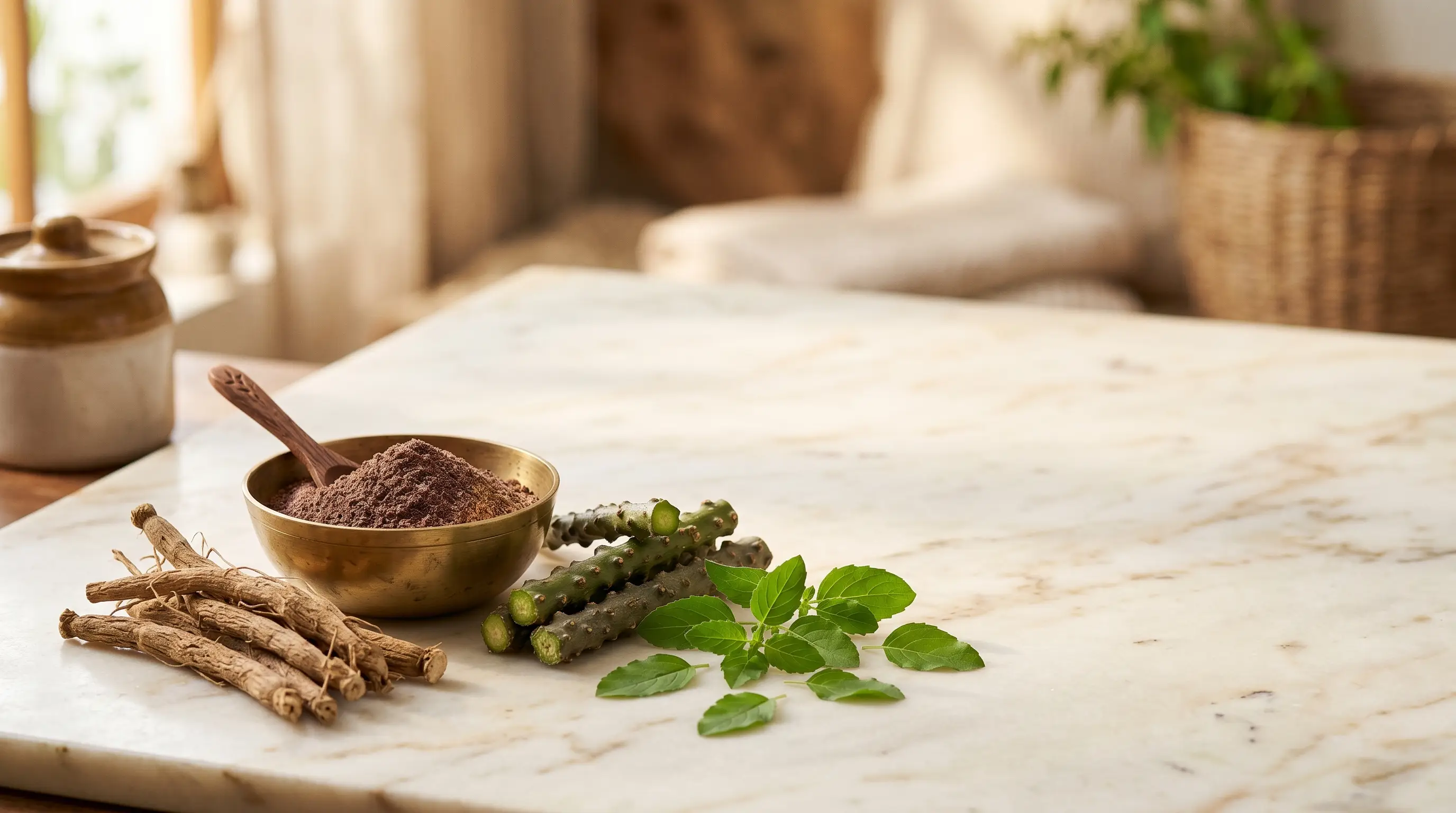
Shatavari (Asparagus racemosus, root) is traditionally described in classical texts as guru (heavy) and snigdha (unctuous) in quality — qualities traditionally understood to balance Vata's dryness and lightness — and is classified as a Rasayana herb, traditionally used for gradual nourishment rather than a quick lift. It is Tanvishataa's lead herb, 80% of the 100mg extract in each tablet, alongside Guduchi/Gulvel (15%) and Anantmul/Sariva (5%). Taken as a steady daily habit after meals — two tablets twice daily for the first three months, then one tablet twice daily for maintenance — Tanvishataa is traditionally used to support digestion and everyday wellness as part of a settled routine. It works alongside a grounding routine, not instead of one, and it is not a treatment for anxiety or any restlessness disorder.
What a grounding routine can't do
A steadier routine genuinely helps many people, but it isn't a fix for real anxiety, an overloaded work life, or an underlying medical condition. If constant busyness is itself a way of avoiding rest, or if the restlessness doesn't ease even on quieter days, that's worth paying attention to rather than treating as only a routine problem.
When to see a doctor
See a doctor if restlessness or anxiety persists most days and interferes with work or daily life, if you notice panic-like symptoms (racing heart, breathlessness, sudden intense worry), ongoing sleep difficulty, unintended weight change, or low mood alongside the restlessness. These deserve proper evaluation rather than just a routine change. If you're pregnant, breastfeeding, managing a chronic condition, or on regular medication, consult your doctor before starting any new herbal supplement, and continue any prescribed treatment as advised.
References & further reading
- Charaka Samhita, Sutra Sthana — describes Vata's guna (qualities): ruksha (dry), laghu (light), sheeta (cold), khara (rough), sukshma (subtle), and chala (mobile), including chala's traditional link to movement of the body and mind (classical Ayurvedic text).
- Ashtanga Hridaya by Vagbhata, Sutra Sthana — describes dinacharya (daily regimen) practices, including abhyanga (self-massage with warm oil) and a settled daily routine, traditionally used to pacify Vata (classical Ayurvedic text).
- Charaka Samhita, Chikitsa Sthana — describes Shatavari among herbs classified as guru (heavy) and snigdha (unctuous) in quality and used in Rasayana (nourishing/rejuvenative) preparations (classical Ayurvedic text).
- These references describe traditional Ayurvedic concepts of dosha and daily routine and are not a claim about any individual's specific health outcome or a diagnosis of an anxiety or restlessness disorder.
Ayurvedic wellness tips, guides and stories — in your language.
Buy NowFrequently asked questions
Is feeling restless but tired always a sign of a Vata imbalance?+
Not necessarily — it can simply be a heavy workload or too little sleep. But the specific pattern of scattered attention paired with an inability to settle down, even when tired, is one classical texts traditionally link to aggravated Vata. If it persists, see a doctor for a fuller picture beyond the dosha framework.
What are Vata's classical qualities?+
Charaka Samhita describes Vata as ruksha (dry), laghu (light), sheeta (cold), khara (rough), sukshma (subtle), and chala (mobile). The mobile quality is traditionally linked to movement of both body and mind, and in excess, to restlessness.
How is this different from the "4 p.m. energy crash" you've written about?+
The 4pm crash is usually described as a dip tied to digestion and meal timing, often Pitta-related. This restless, "wound up" pattern is different — it's about scattered attention and an inability to settle, which classical texts traditionally link to Vata rather than a simple afternoon dip.
Can Tanvishataa help with restlessness or anxiety?+
Tanvishataa is not a treatment for anxiety or any restlessness disorder. It contains Shatavari, traditionally described as nourishing and Vata-balancing in quality, taken as a steady daily habit after meals as part of a settled routine. A grounding daily routine is what actually addresses restlessness — the herb works alongside it, not instead of it.
When should I see a doctor about this?+
See a doctor if restlessness or anxiety persists most days and interferes with your work or daily life, if you notice panic-like symptoms, ongoing sleep difficulty, unintended weight change, or low mood alongside the restlessness. These deserve proper evaluation.
Dr Rucha Mehendale Pai
BAMS (Ayurvedacharya) · Nadi Parikshan Expert
Dr Rucha is an Ayurvedic physician with over a decade of clinical practice in women’s health, digestion and lifestyle wellness, and the formulator behind Tanvi Herbals’ Tanvishataa. She writes to bring authentic, everyday Ayurveda to families across India.