
Wellness
Screens, Late Nights and Pitta: Cooling an Overheated Mind Before Bed
Key takeaways
- Ayurveda links Pitta not only to digestion and body heat but also to the sharpness and heat of the mind — when aggravated, it can show up as racing thoughts, irritability, and a mind that won't settle at night.
- Classical texts describe day and night in three broad parts, each linked to a dosha — the middle stretch of the night is traditionally associated with Pitta, which is also when many of us are still on a screen.
- Bright screens and stimulating content late at night add to this heat at exactly the time classical texts already link to Pitta — a genuinely modern habit meeting an old observation.
- A cooling wind-down is about more than "no screens" — dimmer light, a fixed cut-off, and a calming last hour matter just as much, and Anantmul's traditionally cooling quality is one small piece of that routine.
The 11pm scroll that won't switch off
Work finally winds down, you get into bed, and the phone comes out "just for five minutes." An hour later, you're still scrolling — eyes tired, body wanting to lie still, but the mind replaying the day's conversations or jumping from one video to the next. This isn't a lack of willpower; for many people with long, screen-filled workdays, it's simply what the last hour before bed has quietly turned into.
Is this really about Pitta, or just habit?
Pitta is usually associated with digestion and body heat, but Ayurveda describes its qualities — ushna (hot) and tikshna (sharp) — as showing up in the mind as well: sharp thinking, quick reactions, and a naturally alert temperament. When this tips into excess, the same qualities can appear as restlessness, irritability, and a mind that keeps generating thoughts instead of settling down. It's part of why, after an intense or stimulating evening, some people feel "tired but wired" rather than sleepy.
Why the middle of the night is traditionally a "Pitta window"
Ashtanga Hridaya's Sutra Sthana describes both day and night as divided into three roughly equal parts, each traditionally associated with a dominant dosha — the early part of the evening with Kapha, the middle of the night with Pitta, and the last stretch before dawn with Vata. In most households, that middle stretch falls somewhere around 10pm to 2am — exactly when many working professionals are still finishing a task, scrolling social media, or midway through a show.
How late-evening screens add to that heat
Bright light — especially the blue-toned light of a screen — along with work emails, urgent messages, or a fast-paced show doesn't just delay sleep by keeping your eyes open. It keeps the mind stimulated during exactly the window classical texts already associate with Pitta's sharp, active qualities. The result many people describe: eyes tired, body ready to lie down, but the mind still generating thoughts, replaying conversations, or jumping ahead to tomorrow's to-do list.
The "tired but wired" feeling
This is a common, everyday pattern rather than a sign of anything wrong — a body that's ready for rest but a mind still running on the evening's momentum. It usually responds well to a change in the last hour's habits, though it deserves proper attention if it persists most nights (see the doctor-referral note below).
A cooling wind-down, not just "no screens"
Putting the phone away helps, but Ayurveda's idea of keeping the evening cool (shita) is broader than removing one device. A few small habits shift the whole last hour:
- Set one fixed cut-off time for work screens, even 30-45 minutes before bed, rather than "whenever I finish."
- Swap bright white light for warmer, dimmer lighting in the last hour — a small lamp instead of overhead tube lights.
- Choose a calming last activity over a stimulating one — a slow walk, light stretching, or a few pages of a book rather than fast-paced content or heated group chats.
- Keep the bedroom itself cool and uncluttered — a warm, stuffy room adds to the same overheated feeling.
- Avoid heavy, spicy, or very late dinners, which classical texts also link to a restless night.
- Save difficult conversations, arguments, or urgent work decisions for daylight hours where possible, rather than the last hour before bed.

Where Anantmul and Shatavari's traditional cooling role fits in
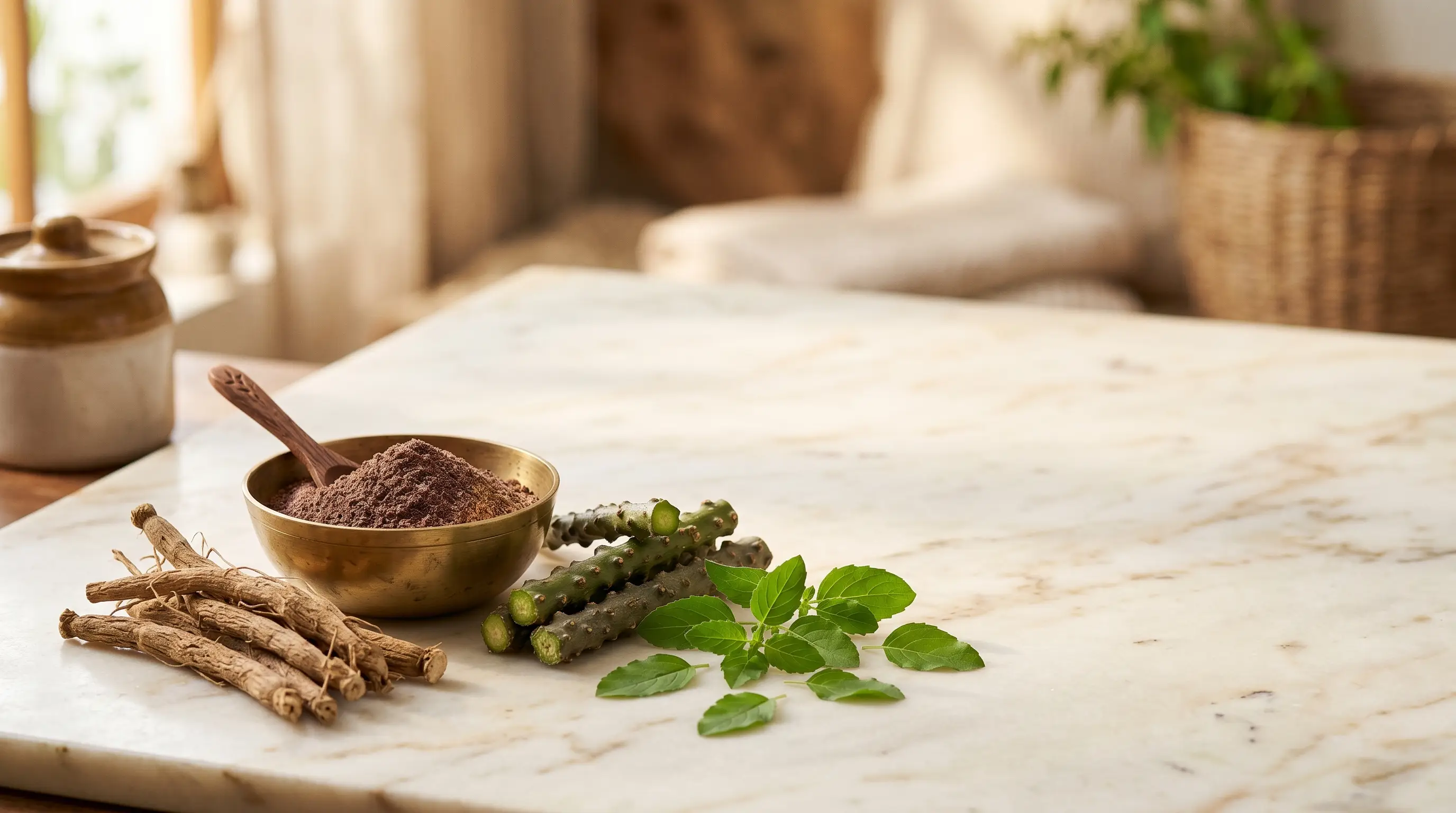
Anantmul/Sariva (Hemidesmus indicus, root) is traditionally described in classical texts as having a sheeta virya — a cooling quality — and is one of Tanvishataa's three herbs (5% of the extract), alongside Shatavari (Asparagus racemosus, root, 80%) and Guduchi/Gulvel (Tinospora cordifolia, stem, 15%), a herb classically described as calming and Rasayana in nature. Taken as a steady daily habit after meals — the usual guidance is two tablets twice daily for the first three months, then one tablet twice daily — Tanvishataa is traditionally used to support digestion and everyday wellness as part of a settled routine. It is not a sleep aid or a treatment for a racing mind; it works alongside a cooling wind-down, not instead of one.
What a cooling wind-down can't do
A calmer last hour helps many people, but it isn't a fix for genuine insomnia, anxiety, or a mind that races most nights regardless of screen habits. If a busy evening or constant scrolling is itself a way of avoiding difficult thoughts or feelings, that's worth noticing — and, if it persists, worth talking to someone about, rather than treating it as only a bedtime-routine problem.
When to see a doctor
See a doctor if you have persistent insomnia for several nights a week over several weeks, racing thoughts or anxiety that interfere with daily life, waking unrefreshed most mornings, or low mood alongside ongoing sleep trouble. These deserve proper evaluation rather than just an evening-routine change. If you're pregnant, breastfeeding, managing a chronic condition, or on regular medication, consult your doctor before starting any new herbal supplement, and continue any prescribed treatment as advised.
References & further reading
- Charaka Samhita — describes the three doshas as governing both bodily and mental expressions (sharirika and manasika), with Pitta's ushna (hot) and tikshna (sharp) qualities traditionally linked to sharpness of intellect and, in excess, irritability and restlessness (classical Ayurvedic text).
- Ashtanga Hridaya by Vagbhata, Sutra Sthana — describes day and night as each divided into three parts, traditionally associated with a dominant dosha, used as a classical framework for daily and nightly rhythm (classical Ayurvedic text).
- Sushruta Samhita — traditionally describes Pitta's guna (qualities), including ushna and tikshna, and their expression in temperament (classical Ayurvedic text).
- These references describe traditional Ayurvedic concepts of dosha and daily rhythm and are not a claim about any individual's specific health outcome or a diagnosis of a sleep or mental health condition.
Ayurvedic wellness tips, guides and stories — in your language.
Buy NowFrequently asked questions
Does Ayurveda really connect screen time to Pitta?+
Ayurveda doesn't describe screens directly — they're a modern habit — but classical texts describe Pitta's hot, sharp qualities as showing up in the mind, and describe the middle of the night as a traditionally Pitta-associated window. Being mentally stimulated by bright screens during that window is a modern habit meeting an old observation, not a scientific claim about screens themselves.
What is the "three-part night" Ayurveda talks about?+
Ashtanga Hridaya describes both day and night as traditionally divided into three roughly equal parts, each associated with a dominant dosha — Kapha in the early evening, Pitta in the middle of the night, and Vata in the last stretch before dawn. It's a classical framework for daily rhythm, not a medical timeline.
Do I have to give up screens completely before bed?+
Not necessarily — a fixed cut-off time, dimmer and warmer light, and calmer content in the last hour matter as much as the device itself. Many people find a consistent wind-down easier to sustain than an all-or-nothing screen ban.
Can Tanvishataa help me sleep better?+
Tanvishataa isn't a sleep aid. It contains Anantmul, traditionally described as having a cooling quality, alongside Shatavari and Guduchi, taken as a steady daily habit after meals. It's traditionally used to support digestion and everyday wellness as part of a settled routine — a calm wind-down and good sleep habits are what actually help with an overactive mind at night.
When should I see a doctor about this?+
See a doctor if you have persistent insomnia for several nights a week over weeks, racing thoughts or anxiety that interfere with your day, waking unrefreshed most mornings, or low mood alongside sleep trouble. These deserve proper evaluation rather than just a bedtime-routine change.
Dr Rucha Mehendale Pai
BAMS (Ayurvedacharya) · Nadi Parikshan Expert
Dr Rucha is an Ayurvedic physician with over a decade of clinical practice in women’s health, digestion and lifestyle wellness, and the formulator behind Tanvi Herbals’ Tanvishataa. She writes to bring authentic, everyday Ayurveda to families across India.