Wellness
Shatavari A to Z: Traditional Uses, Qualities and Who It Suits

Key takeaways
- Shatavari (Asparagus racemosus) is one of Ayurveda's most respected Rasayana herbs — classically described as cooling (sheeta), nourishing (guru-snigdha) and balya (strength-supporting).
- Beyond its well-known reputation as a herb for women, Shatavari is traditionally used more broadly — to support digestion, nourish the body's tissues (dhatus), and calm aggravated Pitta.
- Classical texts describe it as traditionally suiting Vata and Pitta constitutions, or anyone facing a hurried, heat-aggravated lifestyle — best confirmed for your own constitution with a qualified Ayurvedic physician.
- Shatavari is the lead herb in Tanvishataa, making up 80% of the tablet's concentrated extract, alongside Guduchi (15%) and Anantmul (5%).
What is Shatavari, and why does Ayurveda hold it in such regard?
"Doctor, I see Shatavari's name on so many labels — tablets, powders, even milk-based drinks. What actually is it, and is it right for me?" It's one of the most common questions in my clinic. Shatavari is not a modern wellness trend — it is one of Ayurveda's oldest and most respected Rasayana herbs, used across generations, and its role goes well beyond the single association most people know it for.
What is Shatavari, botanically speaking?
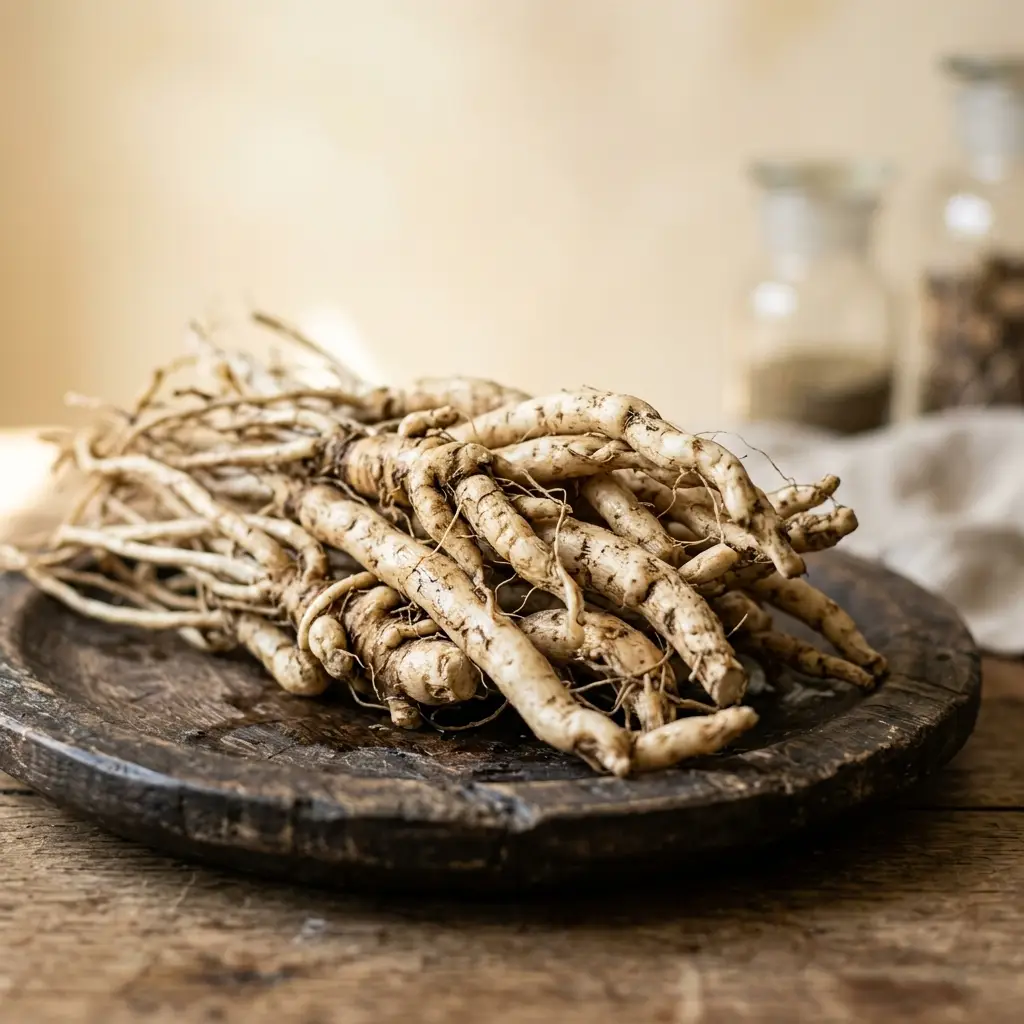
Shatavari is the common name for Asparagus racemosus, a climbing, thorny shrub found across India's tropical and subtropical regions, whose fasciculated root tubers are the part used in Ayurveda. Its Sanskrit name is classically read as "she who has a hundred roots," and by extension, "a hundred forms of nourishment" — a fitting description for a plant whose single root can branch into dozens of tubers.
What classical qualities (guna) does Shatavari carry?
Classical Ayurvedic pharmacology describes Shatavari as sheeta virya (cooling in potency), with a madhura rasa (sweet taste) that remains madhura in vipaka (post-digestive effect) too, and a guru-snigdha guna (heavy, unctuous quality). This combination is why it is traditionally classified as a Rasayana (rejuvenating) and balya (strength-supporting) herb — nourishing rather than stimulating.
What is Shatavari traditionally used for in Ayurveda?
Ayurveda approaches Shatavari as a whole-body nourishing herb rather than a single-purpose remedy. Classically, it is described across several traditional roles:
- Traditionally used as a Rasayana — to support rejuvenation and overall vitality over time, not as a quick fix.
- Long associated with supporting women's everyday wellness across life stages — one of its best-known traditional roles, though not its only one.
- Traditionally used to support healthy digestion and to help pacify aggravated Pitta, owing to its cooling, sweet nature.
- Classically associated with nourishing the body's dhatus (tissues), particularly during periods of general depletion or fatigue.
- Used in classical preparations such as Shatavari Churna (powder, often with warm milk), Shatavari Kalpa, and Shatavari Ghrita (medicated ghee).
Who does Shatavari traditionally suit?
Because Shatavari is sheeta (cooling) and nourishing, classical Ayurveda traditionally favours it for Vata and Pitta constitutions, and for anyone whose lifestyle runs hot and hurried — rushed meals, long screen hours, little rest. Its guru (heavy) quality also means classical texts traditionally note it should be used more cautiously, and in smaller amounts, by those with a Kapha-dominant constitution or sluggish digestion. Every constitution (prakriti) is different, so it's worth discussing what suits you specifically with a qualified Ayurvedic physician rather than assuming any single herb fits everyone.
How was Shatavari traditionally prepared?
Classically, Shatavari root was sun-dried and powdered into Shatavari Churna, most often taken with warm milk. It was also prepared as Shatavari Kalpa (a sweetened, concentrated preparation) or Shatavari Ghrita (medicated ghee), and combined with other herbs in classical formulations — rarely used as a single ingredient on its own.
What role does Shatavari play in Tanvishataa?
In Tanvishataa, Shatavari is the lead herb, making up 80% of the tablet's 100mg concentrated extract, alongside Guduchi (15%) and Anantmul (5%). It is prepared through the classical Ghana Satva method — reducing the herb down into a concentrated extract — the same traditional approach used for all three herbs in the formulation, condensed into a convenient daily tablet.
Who should check with a doctor before taking Shatavari?
Shatavari isn't automatically right for everyone in every situation. If you are pregnant, breastfeeding, trying to conceive, managing a chronic condition, or taking regular medication, speak to a qualified doctor before starting Tanvishataa or any new herbal supplement — and never stop a prescribed medicine on your own to try a herbal alternative.
When should you see a doctor rather than rely on a herb alone?
Shatavari's traditional role is supportive, not curative. Persistent fatigue, a significant change in your monthly cycle, unusual pain, or any symptom that concerns you deserves assessment by a qualified doctor — not just a herbal supplement.
References & further reading
- Charaka Samhita — lists Shatavari among its principal Rasayana and balya (strength-supporting) herbs (classical Ayurvedic text).
- Sushruta Samhita — describes Shatavari's cooling, nourishing qualities and its traditional classification (classical Ayurvedic text).
- Ashtanga Hridaya by Vagbhata — references Rasayana principles and classical preparations such as Shatavari Ghrita (classical Ayurvedic text).
- These references describe traditional Ayurvedic concepts and classification, and are not statements of medical fact about any specific product's clinical effect.
Ayurvedic wellness tips, guides and stories — in your language.
Buy NowFrequently asked questions
What is Shatavari used for in Ayurveda?+
Shatavari is traditionally used as a Rasayana (rejuvenating herb) to support overall vitality, digestion, and women's everyday wellness. It is valued for its cooling, nourishing qualities rather than any single, specific use.
Is Shatavari only beneficial for women?+
No. While it's best known for its traditional association with women's wellness, Shatavari is a general Rasayana traditionally used by anyone seeking cooling, nourishing support — including men, as part of a balanced routine.
What does "Rasayana" mean, and is Shatavari one?+
Rasayana refers to a classical category of Ayurvedic herbs traditionally used for rejuvenation and nourishment over time, rather than immediate effect. Shatavari is considered one of Ayurveda's principal Rasayana herbs.
Can Shatavari be taken every day?+
Shatavari is traditionally used as part of a daily routine, in doses guided by a qualified Ayurvedic physician. It is not meant to be self-prescribed in large amounts, especially during pregnancy, breastfeeding, or alongside other medication.
How is Shatavari included in Tanvishataa?+
Shatavari makes up 80% of Tanvishataa's 100mg concentrated extract per tablet, prepared through the classical Ghana Satva method, alongside Guduchi (15%) and Anantmul (5%).
Dr Rucha Mehendale Pai
BAMS (Ayurvedacharya) · Nadi Parikshan Expert
Dr Rucha is an Ayurvedic physician with over a decade of clinical practice in women’s health, digestion and lifestyle wellness, and the formulator behind Tanvi Herbals’ Tanvishataa. She writes to bring authentic, everyday Ayurveda to families across India.