
Immunity
Why You Fall Sick at Every Season Change: An Ayurvedic Guide to Ritu Sandhi


Key takeaways
- Ritu sandhi is the Ayurvedic term for a season's transition period — roughly the last week of one ritu and the first week of the next — when classical texts describe the body as most vulnerable to falling sick.
- Ashtanga Hridaya specifically advises against switching habits abruptly at a season change; it recommends gradually tapering the outgoing season's routine while easing into the new one over about a week.
- A sudden shift in temperature, humidity and daily routine is thought to unsettle agni (digestive fire) and the doshas, which is the classical explanation for why colds, coughs and low energy cluster around season changes.
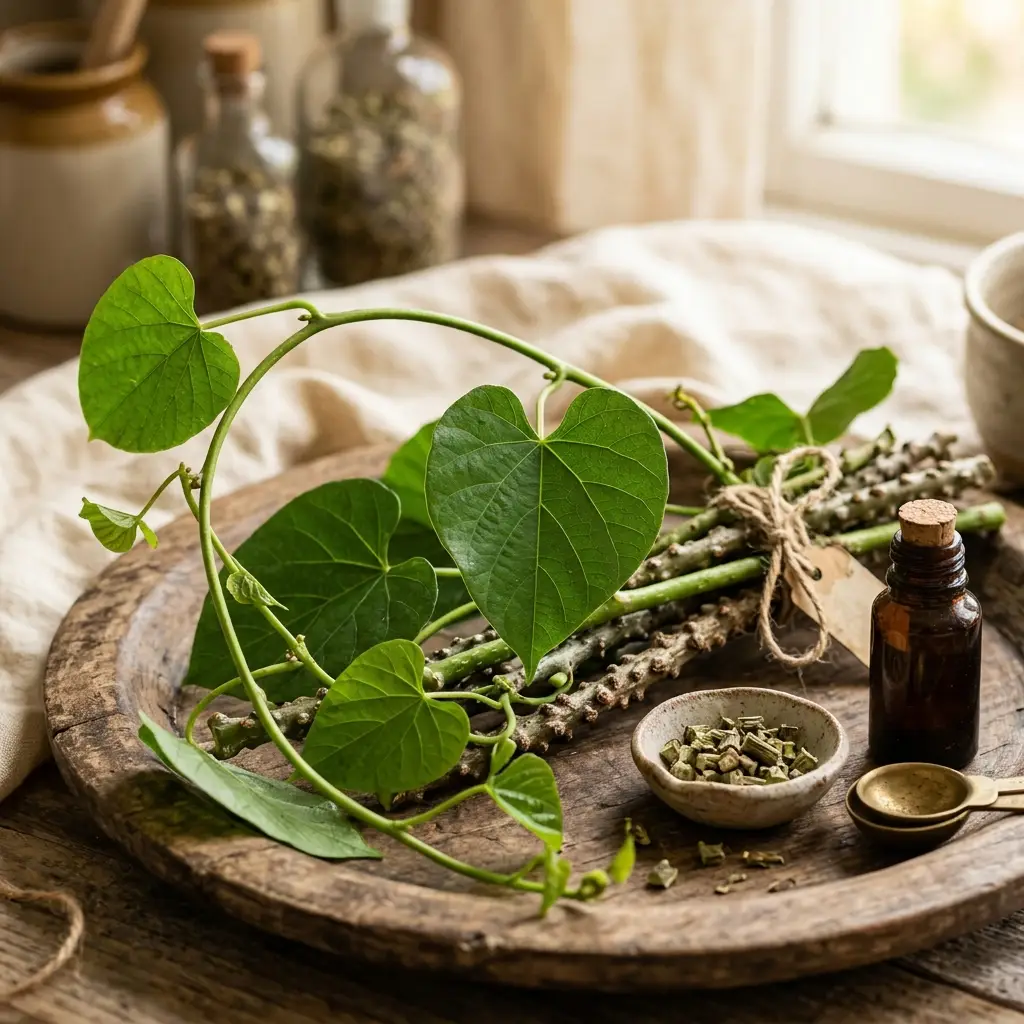
- Guduchi, one of the three herbs in Tanvishataa, is traditionally turned to as a Rasayana during ritu sandhi — alongside, not instead of, a gentle seasonal routine and a physician's guidance.
What exactly is ritu sandhi?
Ask anyone in India when they last caught a cold, and there's a good chance it was right around a season change — the last humid week of the monsoon, or the first cool mornings of autumn. Ayurveda has a name for this window: ritu sandhi, literally the "joining" of two seasons.
Classical Ayurveda divides the year into six ritus (seasons) rather than four, each governed by its own combination of temperature, humidity and daylight. Every point where one ritu ends and the next begins is a ritu sandhi — and Ashtanga Hridaya treats this transition as a distinct period in its own right, not just a date on the calendar.
Classically, ritu sandhi spans roughly the last week of the outgoing season and the first week of the new one — about a fortnight in total, during which the body is described as adjusting to a genuinely different environment.
Why does Ayurveda insist on gradual change?
The classical guidance for ritu sandhi is specific: don't switch your diet, clothing and daily routine overnight. Ashtanga Hridaya recommends tapering off the outgoing season's habits gradually while easing into the new season's regimen — a slow handover rather than a hard switch.
Why does falling sick cluster around season changes?
The everyday experience is familiar: a runny nose right as the weather turns, a scratchy throat during the first cold snap, low energy in that in-between week that's neither one season nor the other. Ayurveda's explanation centres on agni and the doshas.
Agni, the digestive fire, is described as sensitive to its environment — and a sudden change in temperature, humidity or daylight is thought to unsettle it just as much as a change in food does. When agni fluctuates, digestion is said to become less efficient, and ama (undigested residue) is more likely to accumulate. At the same time, each ritu is associated with the natural rise or ebb of a particular dosha, and the changeover point is when that balance is most in flux. Classically, this combination — wavering agni and shifting doshas — is why ritu sandhi is considered a time when the body's natural resilience is more easily tested.
Gentle habits for the transition weeks
Let your food change gradually, not overnight
Rather than switching your entire diet the day the weather turns, ease into it. Start including a few of the new season's foods while gradually reducing the outgoing season's heavier or lighter dishes, depending on the direction of change. Warm, freshly cooked, easily digestible meals are a safe default through any ritu sandhi.
Dress and live for both extremes
Transition weeks often mean warm afternoons and cool mornings or evenings in the same day. Keep a light layer on hand, avoid getting caught out in a sudden change of weather, and don't let evening coolness catch you underdressed — small precautions that classical texts link to staying steady through the changeover.
- Shift your diet gradually over the transition week, not overnight
- Favour warm, freshly cooked, easily digestible food during ritu sandhi
- Layer clothing for swings between warm days and cool mornings or evenings
- Keep sleep and meal times steady even as the season outside is changing
- Add gentle daily movement rather than skipping it during the adjustment
Where do Rasayana herbs like Guduchi fit in?
Alongside a gradual routine, Ayurveda has long turned to Rasayana herbs — traditionally used to help the body maintain its natural resilience through change, including the seasonal changeover. Guduchi (Gulvel) is one of the herbs most closely associated with this role in classical practice.
Tanvishataa brings Guduchi together with Shatavari and Anantmul in a single daily tablet, prepared by the classical Ghana Satva (concentrated extract) method. Taken as part of a steady routine through ritu sandhi — not as a quick fix, and not as a substitute for medical care — it is traditionally meant to support everyday resilience, generally taken as advised by your physician.
When should a seasonal cold send you to a doctor?
A gentle seasonal routine is traditionally used to support the body's natural resilience — it is not medical treatment, and ritu sandhi is not an explanation for every symptom. See a qualified doctor promptly for a high or persistent fever, breathing difficulty, symptoms that last beyond a week or keep worsening, severe body ache, or dehydration. If you are pregnant, breastfeeding, managing a long-term condition or on regular medication, speak to your physician before adding any herb, and never stop prescribed treatment on your own.
References & further reading
- Ashtanga Hridaya by Vagbhata — Ritucharya adhyaya: ritu sandhi and gradual seasonal adaptation (classical Ayurvedic text).
- Charaka Samhita — Rasayana dravyas and seasonal strength (classical Ayurvedic text).
- Sushruta Samhita — agni, ama and seasonal digestion (classical Ayurvedic text).
- These references describe traditional Ayurvedic concepts and are not statements of medical fact.
Ayurvedic wellness tips, guides and stories — in your language.
Buy NowFrequently asked questions
What is ritu sandhi in Ayurveda?+
Ritu sandhi is the Ayurvedic term for the transition period between two seasons — roughly the last week of the outgoing season and the first week of the new one. Classical texts describe it as a time when the body is adjusting and more easily unsettled, so a gentle, gradual routine is traditionally recommended.
Why do so many people fall sick when the weather changes?+
Ayurveda's explanation centres on agni (digestive fire) and the doshas, both of which are described as sensitive to sudden shifts in temperature and humidity. When agni fluctuates and dosha balance is in flux, the body's resilience is considered more easily tested — which is the classical reasoning behind why colds and low energy cluster around season changes.
Should I change my diet suddenly when the season changes?+
Classical guidance is the opposite — Ashtanga Hridaya recommends gradually tapering the outgoing season's habits while easing into the new season's routine over about a week, rather than switching overnight.
Can Tanvishataa be taken during ritu sandhi?+
Tanvishataa is a herbal wellness supplement traditionally used to support everyday resilience and digestion, including through seasonal transitions, as part of a routine. Take it as advised by your physician; it is not a treatment for any illness.
Does an Ayurvedic seasonal routine prevent colds and seasonal illness?+
No. A seasonal routine is traditionally used to support the body's natural resilience — it is not a guarantee against illness. A high or persistent fever, or any worsening symptom, should be assessed by a qualified doctor.
Dr Rucha Mehendale Pai
BAMS (Ayurvedacharya) · Nadi Parikshan Expert
Dr Rucha is an Ayurvedic physician with over a decade of clinical practice in women’s health, digestion and lifestyle wellness, and the formulator behind Tanvi Herbals’ Tanvishataa. She writes to bring authentic, everyday Ayurveda to families across India.